

Summary: My Joe Rocket GPX 2 gloves began failing during their first major trip—about four weeks and roughly 1,300 miles after I bought them. The touchscreen material around the index finger is separating, and the yellow cuff patch is cracking apart. They’re comfortable gloves with good control feel, but new motorcycle gear should survive longer than one trip.

I bought my Fieldsheer Legend gloves in April 2021 and used them for more than five years before they finally wore out. The leather was pulling apart at the seams and I had to admit my trusty faithfuls weren’t working for me any more. They’d become one of those pieces of gear I barely thought about—they fit, they worked, and they held up season after season.
When it was time to replace them, I needed a new pair before leaving on a 2,500-mile trip around the Pacific Northwest.
The Joe Rocket GPX 2 looked like a reasonable choice: goatskin leather construction, knuckle armor, padded finger protection, a reinforced palm, and a full gauntlet cuff. Nothing about the design suggested I’d be documenting failures four weeks later. I ended up in a large, one size bigger than I normally wear. The medium was too tight through the palm. Once I sized up, the fit was right and the gloves broke in quickly.
Two Thousand Miles on the R 1250 GS
I wore the gloves on my BMW R 1250 GS throughout the Pacific Northwest trip, and from a riding standpoint, they did a lot well. The comfort, airflow, grip, and motorcycle control feel, and phone usage were all good. The pre-curved shape sat naturally around the grips, and the gloves didn’t interfere with the throttle, levers, or the GS’s wonder wheel.
The gauntlets fit easily over my Aerostich Roadcrafter sleeves and and kept the wind out Touchscreen control was surprisingly good too. I could use my phone without pulling off a glove—at least until the material itself started coming apart.
The First Signs of Trouble
I was riding Washington State Route 410 around the backside of Mount Rainier. It’s a genuinely great motorcycle road, when I glanced down at my left hand. The touchscreen material on my index finger was flapping in the wind.
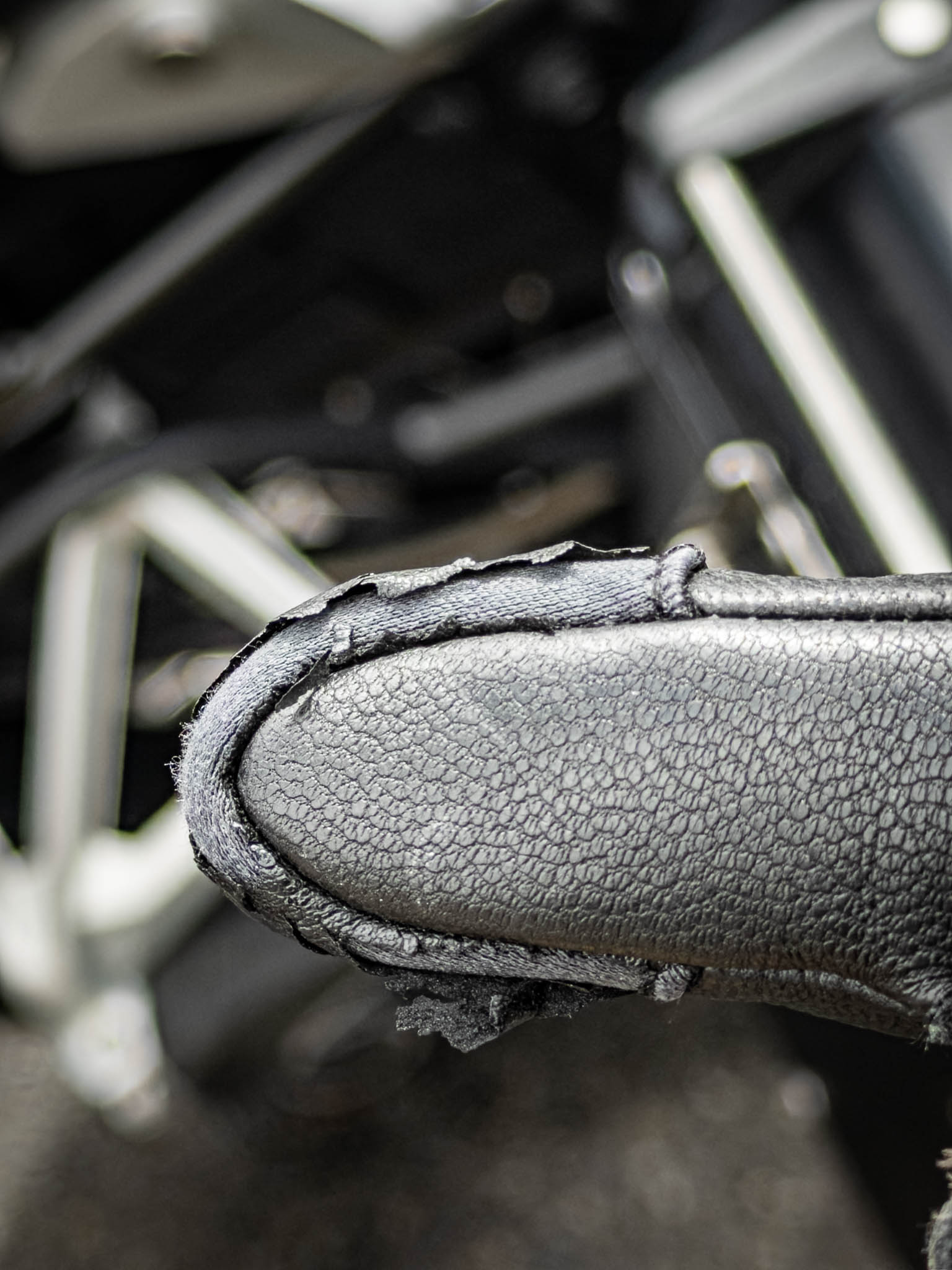
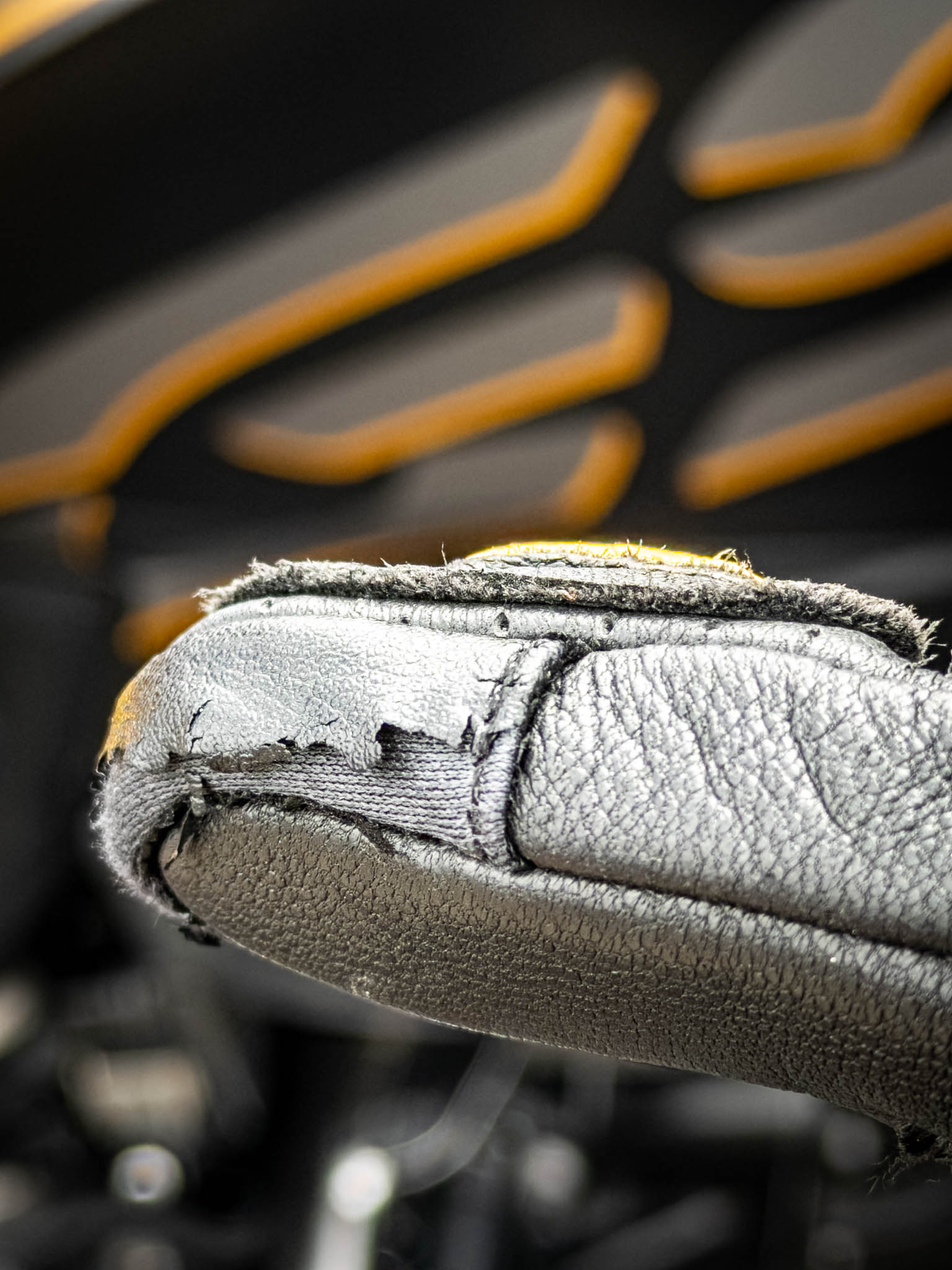
I was about halfway through the trip, which put roughly 1,300 miles on the gloves when failure started to appear. The touchscreen material was separating where it wrapped around the fingertip. Loose threads and flapping fabric were visible, and a hole was starting to open along the edge. Not discoloration. Not a surface scuff. The material itself was coming apart on one of the best roads of the trip.
This shouldn’t happen.
The yellow Rocket patch on the gauntlet cuff was failing too. Cracks ran through the graphic, with sections beginning to split and lift away from the material underneath. It was the kind of cracking I’d expect from an old vinyl patch that had spent several summers baking in the sun—not something on a four-week-old glove.
One thousand miles isn’t nothing, but it isn’t near enough use to explain this kind of deterioration. I’m expecting 40,000 miles in a glove. This was one warm-weather trip, not several seasons of harsh commuting and touring.

Comfort Isn’t the Problem
The frustrating thing is that I like wearing these gloves.
They became comfortable quickly, airflow was good, the palms gripped well, and I retained enough feel to operate the controls naturally without hand discomfort. The gauntlets worked with my jacket, and the touchscreen finger was genuinely useful, until it started falling apart. As the trip went on, touch screen operations became impossible.
Durability isn’t a secondary feature in motorcycle gear. Gloves exist to protect your hands, and that depends on the materials and seams staying intact. Once a fingertip starts separating during normal use, it’s hard to trust the rest of the construction.
The cracked cuff patch is cosmetic, but all of us have a bit of vanity in our motorcycle gear. That isn’t ok either. The deteriorating index goes further as it’s an operational and safety failure.
Five Years Versus Four Weeks
The Fieldsheer Legend gloves eventually wore out too. That’s why I needed a replacement in the first place.
But I bought those gloves in April 2021 and rode in them for more than five years. The GPX 2 started showing damage two-thirds of the way through its first major trip. I was expecting another 3-5 years from the Joe Rocket GPX 2’s. I was expecting more than four weeks.
What Works 👍🏻
- Comfortable once I sized up to a large
- Broke in quickly
- Good airflow in warm weather. Failed before I could try in cold weather. Did ok in low 60s Washington fog with heated grips.
- Natural grip and control feel
- Gauntlets fit cleanly over jacket sleeves
- Touchscreen control worked well before the material failed
What Needs Work 👎🏻
- Touchscreen material separating around the index finger
- Yellow cuff patch cracking and lifting
- Clearly visible damage appeared roughly 1,300 miles into the first trip
Would I Buy Them Again?
No—not based on this pair.
Four weeks and 1,300 miles of summer riding shouldn’t be enough to open a fingertip or crack apart a cuff patch, but that’s what happened. The GPX 2 gets many of the everyday details right. It’s comfortable, provides good control feel, fits well over a jacket, and has touchscreen functionality that actually works. None of that outweighs a construction failure during the first trip.
The Fieldsheers did their job for more than five years and became a favorite. The Joe Rockets had me photographing a deteriorating glove before I made it home from my first long trip with them.
FAQ: Joe Rocket GPX 2 Durability
Q: Do Joe Rocket GPX 2 gloves run small?
They did for me. I normally wear a medium, with other gloves but it was too tight through the palm. Moving up to a large gave me the correct fit.
Q: What failed on the touchscreen fingertip?
The material around my index fingertip began separating roughly 1,300 miles into the first trip.
Q: How quickly did the yellow cuff patch begin cracking?
Cracks and lifting appeared within about four weeks and one 2,000-mile summer trip. The damage appears cosmetic, but it happened much earlier than I would expect.
This review is part of a series covering the gear I used during my Pacific Northwest trip. For more gear that has—and hasn’t—held up on the road, read my Anker Prime 160W review and Chigee AIO-5 review. New here? Start with the essentials.



Leave a Reply