
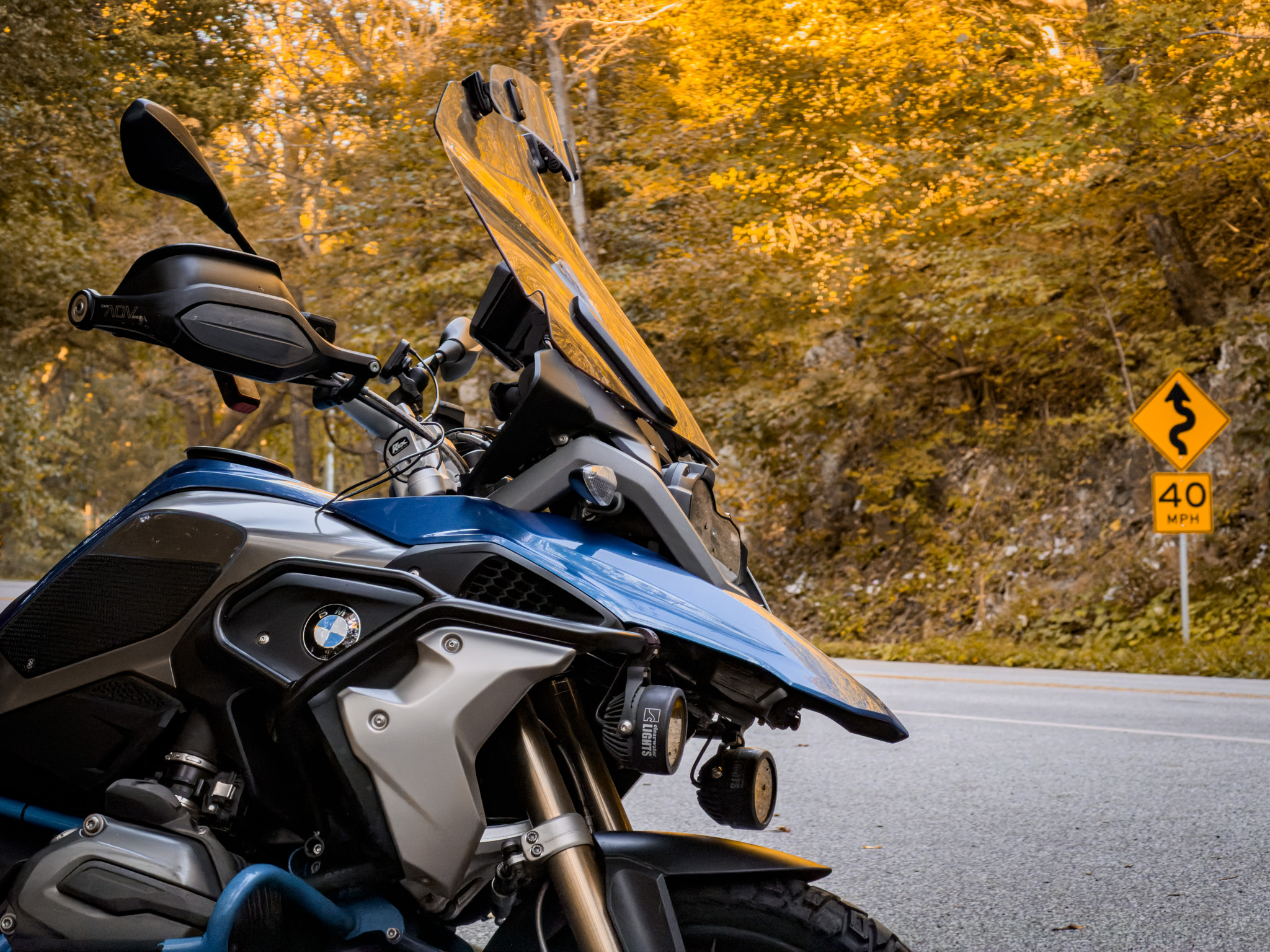
Virginia may be for lovers, but it’s not for the faint of heart.
As a Boy Scout, our scoutmaster was always talking about the Appalachian Trail. It was where we went to gain experience, work on merit badges, and learn how to be out in the woods. Georgia was easy, he’d say; in under 80 miles you’d be in North Carolina. North Carolina had some real climbing, with Clingmans Dome topping 6,000 feet and another 95 miles across the state. Virginia was something else. The trail runs 550 miles through it, and unlike the states before, there isn’t another border arriving every few days to give you an artificial marker of progress. Virginia just keeps going. In the lore I grew up with, it was where people got tired, lost momentum, and sometimes decided they’d had enough.
A few years later, I hiked part of the Georgia section with some fraternity brothers from another chapter who had much bigger ambitions. They left Springer Mountain in North Georgia planning to make it all the way to Mount Katahdin in Maine. They didn’t make it. Where did they stop? Damascus, Virginia. Long before I ever pointed a motorcycle toward the state, it had taken on an almost mythical quality in my head. It was long, it was difficult, and it was something you had to grind through.
Virginia, here I come.
Leaving Brian’s house felt like autumn hitting its stride. He and his wife had to leave around 7:30am to catch a flight (thank you for even considering hosting me), and we hadn’t exactly gotten to bed early after an evening of beer, old colleagues, and trying to catch up on years of life in a few hours. The temperature on the bike read 54 degrees, the sky had finally cleared, and the air had a sharp fall crispness that felt good after days of southern rain. Savannah had been almost 90 degrees a few days earlier. Now I had the heated gear packed close enough to reach without unloading half the motorcycle.
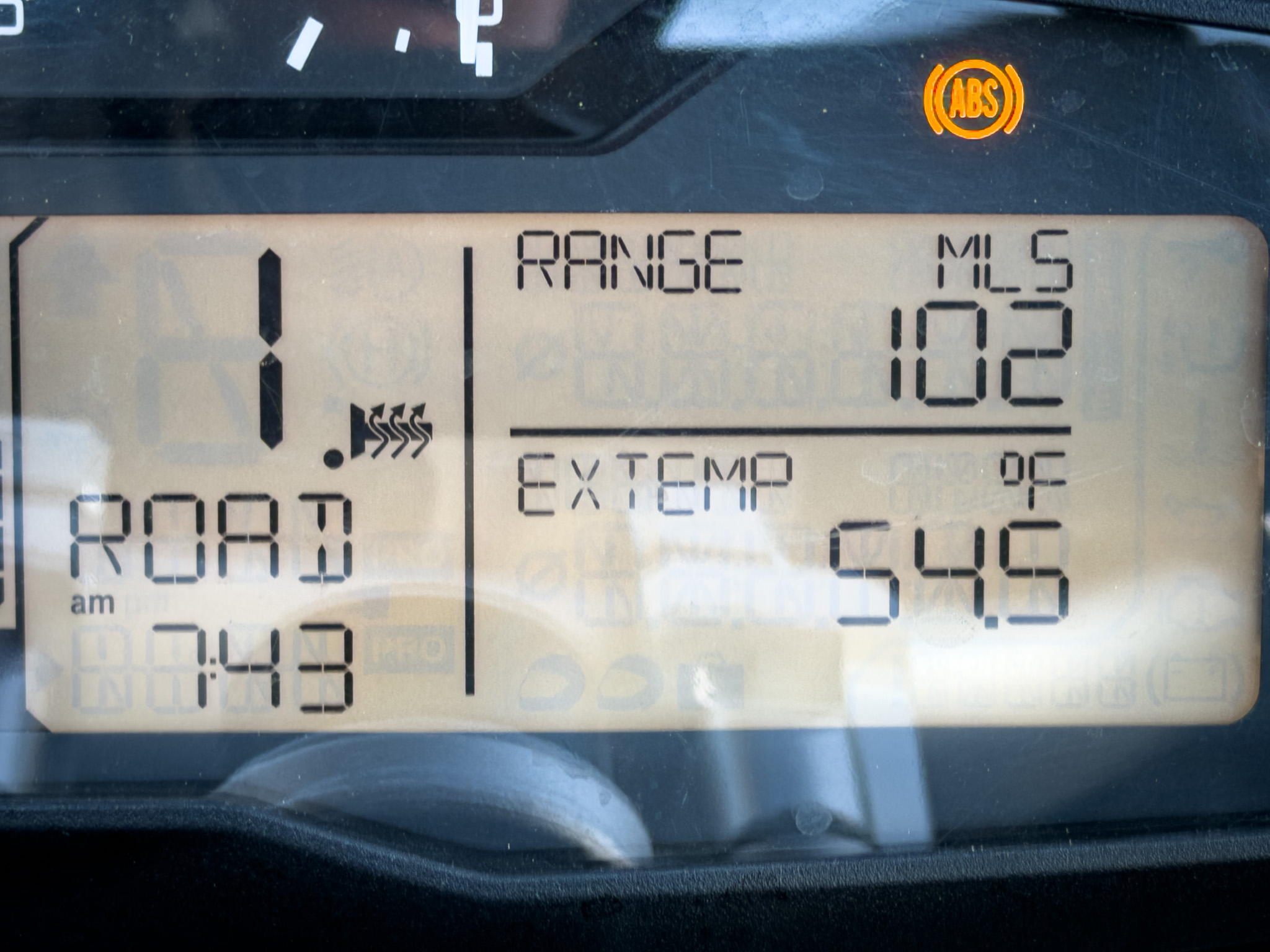
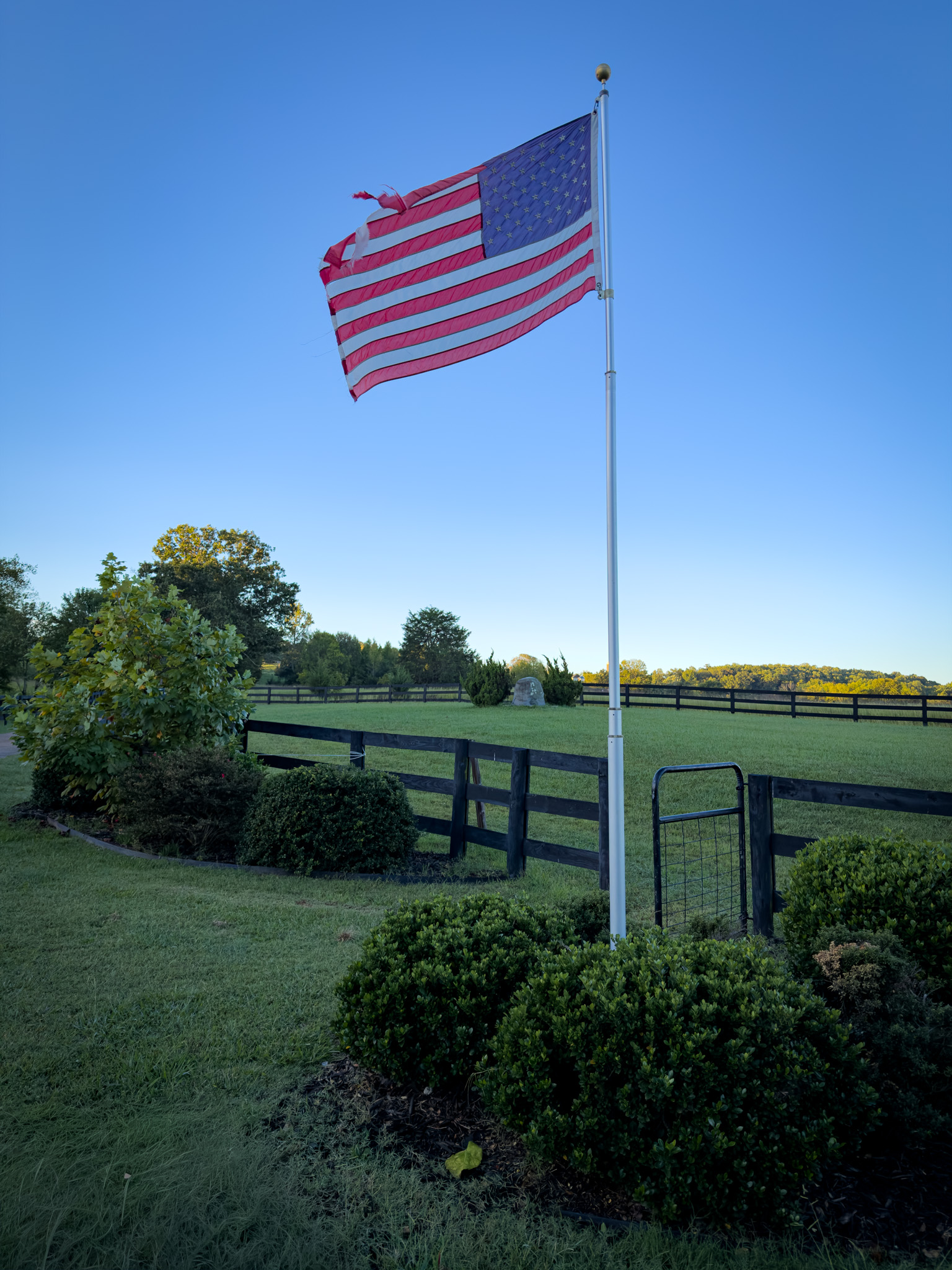
First order of business was breakfast, and I’d never eaten at a Bojangles. I’m not even sure most people out west know what it is, but I’ve always loved the name. It sounds like biscuits, fried chicken, and spice, and probably more calories than I needed after several days of southern cooking, which sounded perfect. I ordered the spicy chicken sandwich with cheese and waited.

It became clear within a few minutes that this particular Bojangles was having a complete meltdown. The drive-through line was backing up around the building, and the lobby kept filling with DoorDash drivers staring at their phones and glaring at the staff. Those of us who had simply walked in were clearly the lowest priority in whatever system was holding the restaurant together. The manager bounced between stations trying to restore order, they were short at least one person, and the staff who were there weren’t meshing. Orders kept coming in faster than food went out.
Normally I could see myself getting frustrated. Instead, I had time. There was no meeting waiting for me, nobody expecting me at a particular hour, and the destination for the day wasn’t going anywhere. The cashier didn’t have that luxury. You could see the anxiety building on her face as more people appeared and more orders piled up. At one point I walked back toward the counter and asked if she was doing okay. She nodded. I didn’t believe her, but I didn’t know how to help other than to reassure her it was going to be okay.
My breakfast was late. She was trying to survive the morning. Those were not the same problem. For years so much of life was governed by the next meeting, the next commitment, the next place I needed to be. Here, twenty minutes just meant I got to Virginia twenty minutes later.

Breakfast eventually arrived, and I went back to the other mission of the morning: finding a postcard for Dad. The postcard rally has become one of the unexpected little threads through this trip. Dad’s birthday is coming, and he’s at a point in life where he doesn’t really need more stuff. He was also the one who fell in love with Follow Me East when I wrote about crossing the country on a motorcycle more than twenty years ago. Rather than buying him something, I decided to bring him along. Each place gets a postcard with some little moment from the trip, maybe a memory between us, maybe something I saw that day. The problem is that finding postcards in 2026 has apparently become an adventure of its own.
A Pilot Travel Center seemed logical: truckers travel, travelers send postcards, at least in theory. The cashier laughed when I asked and said they hadn’t carried them in years. She suggested Barnes & Noble, and there were two in the area, one behind me and one generally in the direction I was already going. Forward won.
That decision put me on the campus of Elon University, winding through manicured lawns and brick buildings, the kind of place parents would happily photograph their kid in front of on move-in day. Unfortunately, it wasn’t the big suburban Barnes & Noble I had imagined. It was the university bookstore, and parents’ weekend had apparently done a number on the inventory. There were sparse amounts of Elon gear and a few generic greeting cards, but nothing that said North Carolina the way I wanted.
The postcard hunt had now involved a small town, a truck stop, and a university bookstore, all in pursuit of a piece of paper worth a couple of dollars. From any efficiency standpoint it made no sense, but efficiency wasn’t the point. Dad wasn’t on the back of the motorcycle. This was my way of letting him occupy a little space on it anyway. North Carolina would get another chance when I came back south and rode the Tail of the Dragon.

Crossing into Virginia still felt significant. I was finally leaving the Carolinas behind, the rain had broken, and the mountains were coming back into the picture. Virginia was also new territory, a place I had years of stories about and almost no experience with. I wasn’t planning a huge mileage day. I wanted to get north, but I was becoming much less interested in maximizing distance and much more interested in what happened between where I started and where I slept.
Naturally, right after crossing the state line my phone reminded me I had a medical appointment in about an hour. I knew it was on the calendar, but the timing still caught me a little off guard. I’ve done medical appointments from motorcycle trips before. The process is simple: find somewhere quiet with decent cell service, prop up the phone, pull off the helmet, and appear on video wearing enough motorcycle gear that the medical team gets a laugh out of it. With about ten minutes to spare, I saw a John Deere dealer right off the highway. Big parking lot, five bars of cell signal. Perfect. I got settled, logged into the medical system, and discovered the appointment had been moved. Problem solved.

I wandered into the store anyway. The part of my inner child that’s still fascinated by heavy equipment never left me, and the twelve-year-old took over pretty quickly. He ran. I followed. Motorcycles obviously stuck with me, but I’ve always loved machines: tractors, mowers, excavators, bulldozers. I always got a thrill running the big machines at DigThis in Vegas, year over year. The showroom was full of contraptions to cut grass, plow fields, and do all kinds of things with land that a guy in Silicon Valley who measures his lawn in square feet never has to think about.
That’s where I met Bruno. He was probably ten years older than me, tall and broad-shouldered, and running point on sales that afternoon. He asked the obvious question: “What brings you in?”
“I’m looking for a postcard for my dad.”
That clearly wasn’t the answer he expected. He gave me a look, and I could almost see his gears turning, then took the question completely seriously. He led me downstairs to the parts department, where the John Deere memorabilia lived: hats, shirts, toys, license plate frames, little tractors. No postcards, however.
I did manage to find the smallest lawn mower in the dealership, a little four-inch zero-turn that would fit nicely into the motorcycle luggage. The guy behind the parts counter laughed when I set it down.
“That’s the cheapest mower we sell.” Probably the only one they sold that would fit my property.
What stayed with me wasn’t the toy mower, though. It was Bruno. We probably spent another thirty minutes talking about equipment: different machines, what people use them for, features, prices, why somebody buys one configuration over another. I find the whole industry fascinating, but from Bruno’s perspective I was a terrible sales opportunity. Home was thousands of miles away, and my yard is small enough that most of the machines in his showroom could finish it before the oil made one full circulation through the engine. He knew I wasn’t buying a tractor. It didn’t matter.
Bruno never gave me the feeling that his time was being wasted or that there was somebody more commercially useful he should be talking to. I was interested in something he knew a lot about, so he talked to me about it. He even told me to stop by again when I headed south. There’s a kindness that gets lost in how transactional so much of adult life becomes. At work, somebody’s time usually has a purpose attached: an outcome, a decision, a sale, a next step. Bruno had nothing to gain from me. He made the time anyway.
As I was leaving, I asked how he’d ended up in the business in the first place. He lit up with the kind of smile that comes with wisdom and good stories. “My boss just asked me.” Bruno cemented something this season has been teaching me: say yes way more than you say no. Maybe one day I’ll work for Bruno!
I’ve been thinking a lot lately about how often life rewards saying no. No is safe. No preserves time. We spend much of our professional lives learning to evaluate risk, find the flaw, and list all the reasons something may not work. Those are valuable skills. I’m just not convinced they should be the only ones we practice. This whole season of my life exists in part because I suddenly have more room to say yes. Yes to another month on the road. Yes to riding into a town I hadn’t planned to visit. Yes to walking into a John Deere dealership because a medical appointment moved and left my calendar empty. Bruno had apparently said yes somewhere along his way, and years later he was still enthusiastic enough about where it took him to spend half an hour talking tractors with a guy who came in looking for a postcard. I liked that. He was clearly one of the good ones.
Farther north, Troutville, just outside of Roanoke solved both the hunger problem and, finally, the postcard challenge.

Cracker Barrel has one huge advantage for someone hunting increasingly obsolete tourist memorabilia: half the restaurant is a gift shop. Somewhere among the candy, old-fashioned toys, seasonal decorations, and general wall of Americana, I found the last two Virginia postcards. The front showed the dogwood blossom, and the woman ringing me up was almost as interested in the postcard as I was. She enthusiastically told me about Virginia’s state symbols, the dogwood in particular. It turns out Virginia gets double duty out of it: the American dogwood is both the official state flower and the official state tree.
What I liked more than the trivia was how much she wanted to tell me. Earlier in the morning, one cashier had laughed because I was asking for something people apparently stopped buying years ago. Here was another person who seemed genuinely pleased that I wanted this little piece of Virginia and wanted me to know something about what was printed on it. The postcard itself costs almost nothing. The hunt for it keeps introducing me to people.

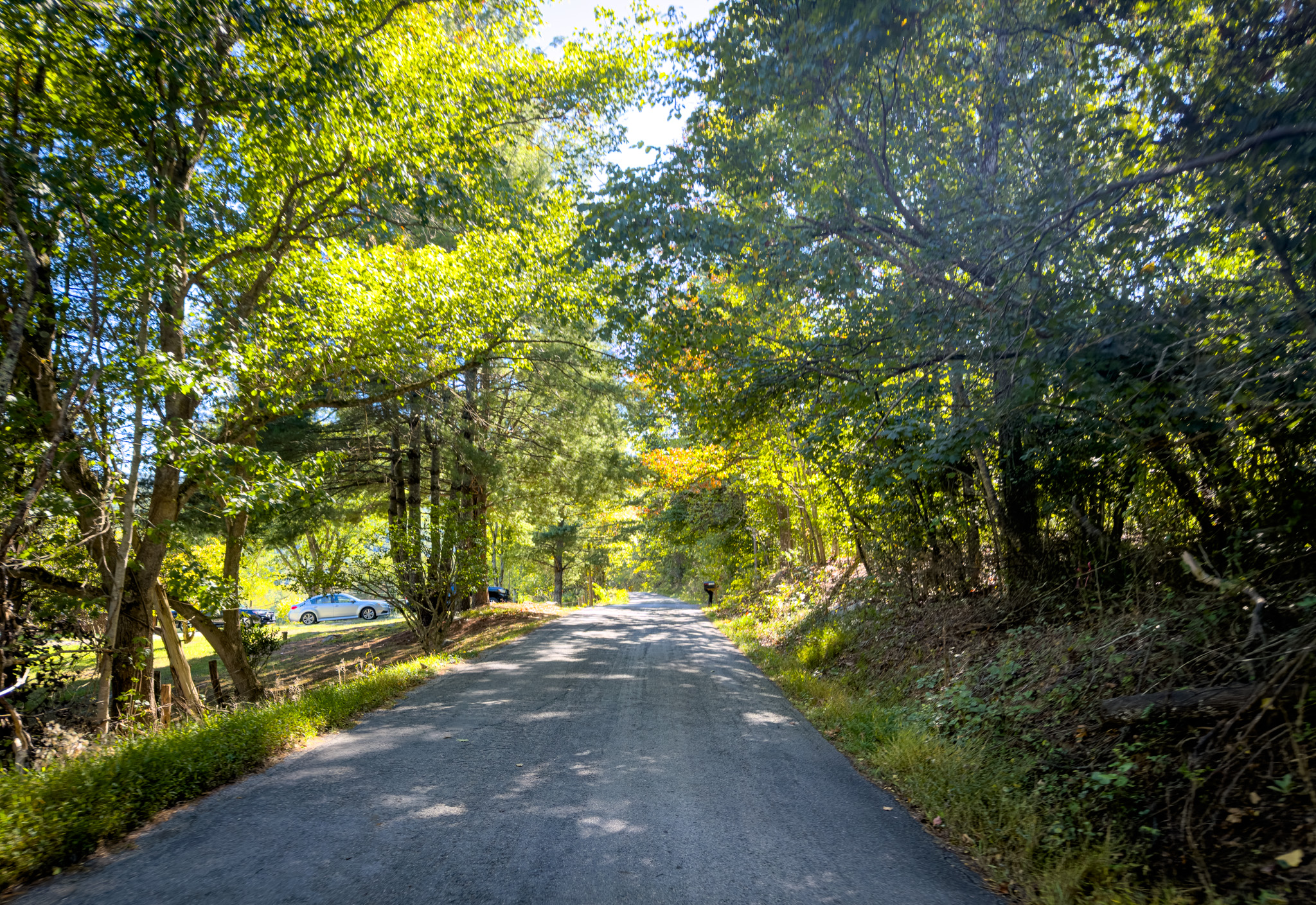
West of Roanoke, Virginia finally started delivering the kind of roads I’d been hoping to find. The topographic view in Google Maps made VA-311 look promising, with the road twisting through the mountains rather than cutting across them, usually a good sign on a motorcycle. The highways got smaller, the traffic thinned, and the landscape tightened into long Appalachian valleys where mountains rise on both sides and the roads follow whatever path the terrain allows.
VA-311 was fantastic. It climbed through tunnels of trees, dropped over the other side, curled around exposed rock, and climbed again. The corners came steadily enough to keep me engaged without turning the afternoon into work. I was finally riding the sort of mountain road I’d imagined when I started planning the eastern part of this trip. I can’t wait to do this road southbound with fall color. It wasn’t Northern California, and it wasn’t supposed to be. I think I’m finally learning how important that distinction is.

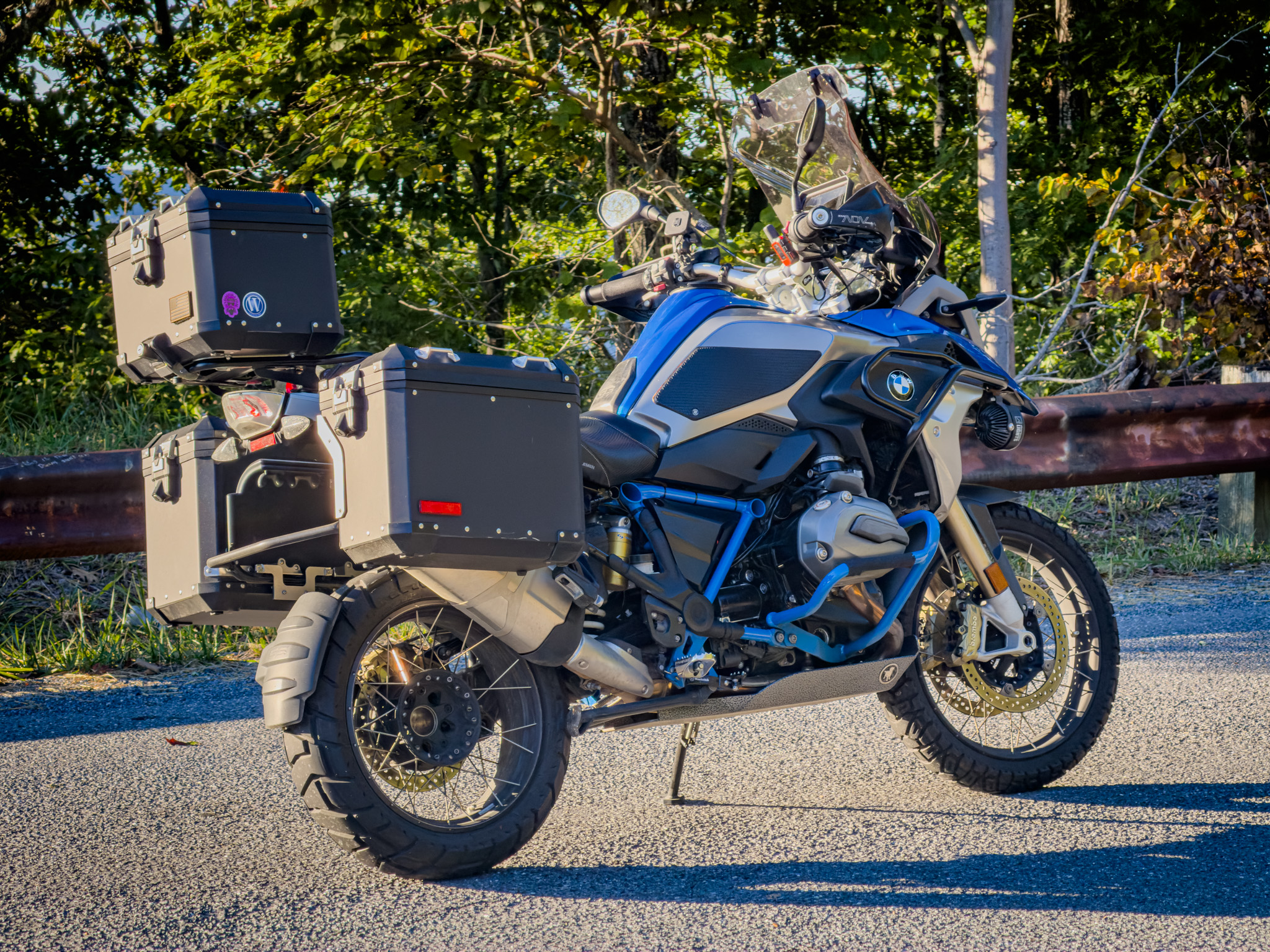
Eventually I made my way into Paint Bank, Virginia, which consisted of a general store, a few scattered buildings, and enough mountains to make the place feel tucked away from whatever was happening elsewhere. As I pulled in, a group of maybe ten motorcycles was parked across the road on a gravel area. The drop from the pavement was sharper than I liked, the lot was already crowded, and after putting the GS on its side the day before in North Carolina, I decided I had contributed enough to the Humble Pie Fund for one trip. I parked beside the general store instead.
Two motorcyclists were sitting in rocking chairs, talking. I still hesitate before walking into conversations like that. Once someone starts talking, I’ll talk to almost anybody; it’s the initial intrusion that always feels awkward. I pushed through it, walked over, introduced myself, and after a few minutes one of the guys pointed across the road toward the larger group.
“Are you with those guys?”
“No, I’m from California.”
“Oh, you’re cool then.”
That was Andrew, and the other guy was Corey.


I had no idea what the riders across the street had done to become uncool. Apparently there was a motorcycle rally farther up the road around Lewisburg, West Virginia, and something about the rally, the people attending it, or maybe the general concept had already gotten under Andrew’s skin. The longer we talked, the more I realized Andrew had a fairly large number of things available to get under his skin. He was an experienced rider, probably late fifties, wearing all the right gear and riding a sporty motorcycle. He was from the DMV, which apparently means DC, Maryland, and Virginia in these parts, although my brain keeps translating it to Department of Motor Vehicles. We started talking about roads, places we’d ridden, places worth riding. California came up.
“Highway 1 really isn’t that great of a ride.”
That one got my attention. I don’t have a problem with somebody disliking a road I like. People experience places differently, and a great road on Tuesday can be miserable on Saturday. But Highway 1? I know its faults: traffic, fog that erases the views you drove hundreds of miles for, landslides that close sections of it with frustrating regularity. It’s also Highway 1, the internationally known nirvana of motorcyclists, with redwoods, cliffs, Big Sur, the Pacific going on forever beside you, and little towns appearing between huge stretches of coastline. People travel from all over the world hoping to ride that road once.
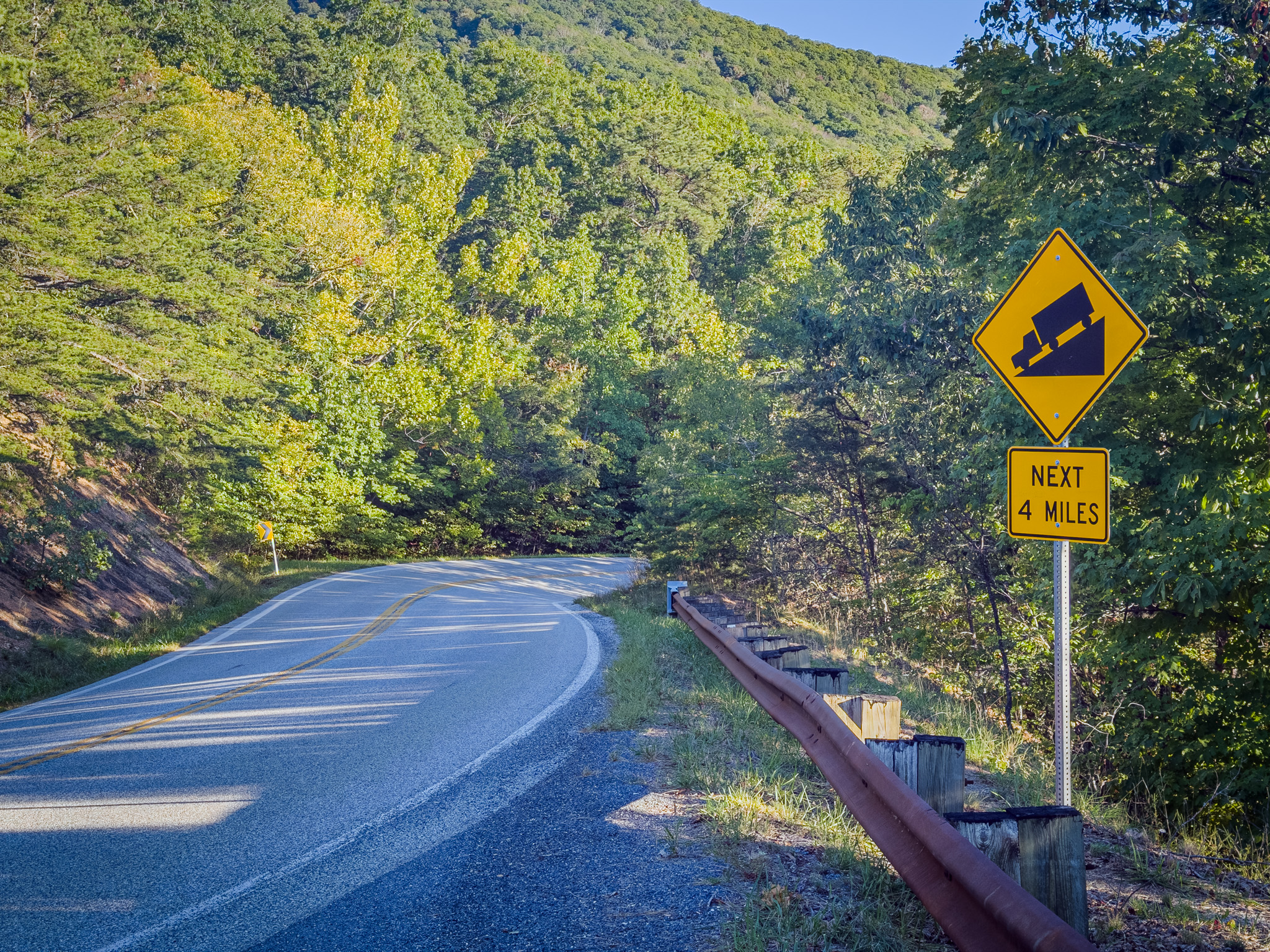

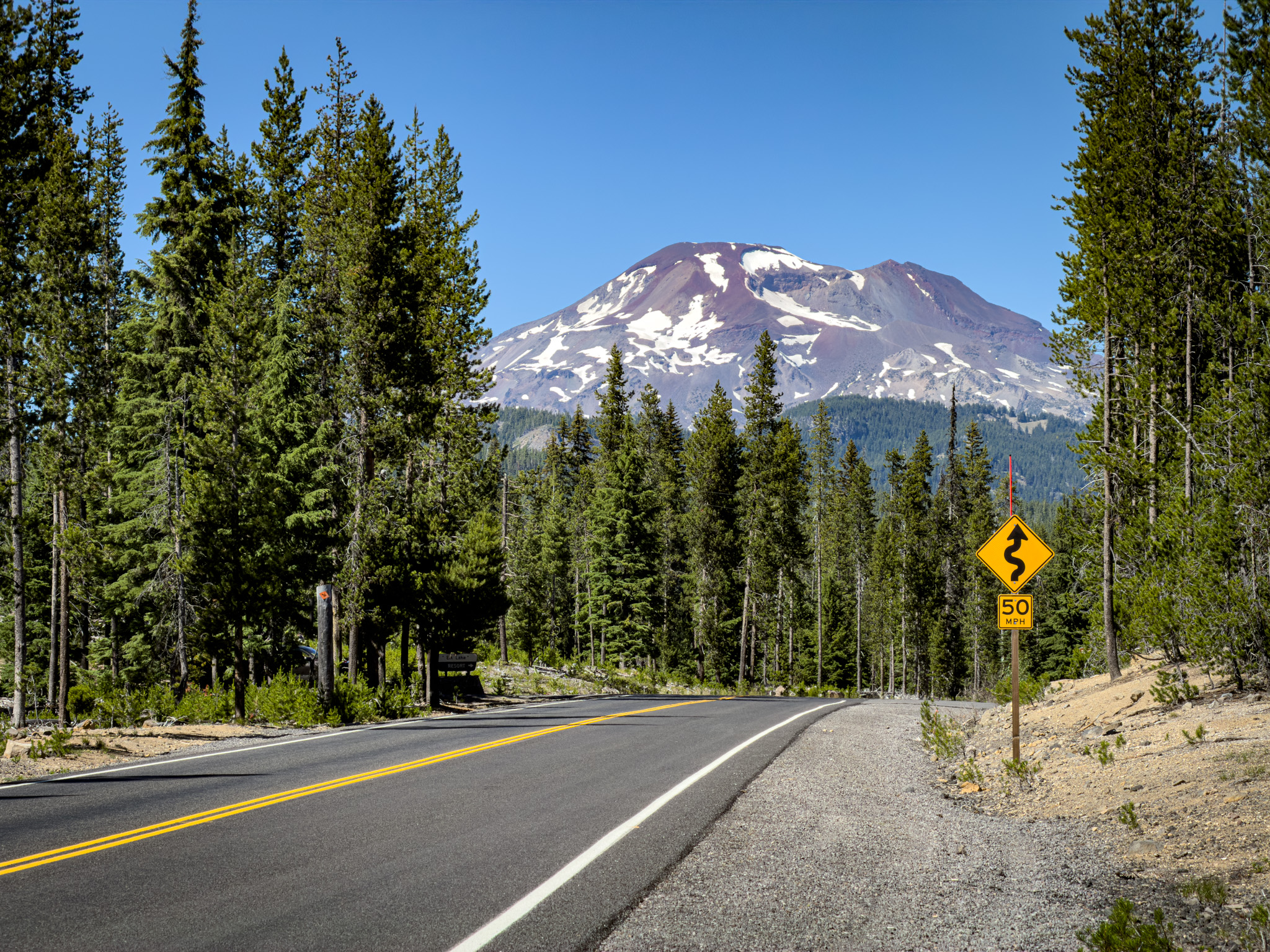
What bothered me about Andrew’s comment wasn’t really the road. As the conversation went on, I noticed a larger pattern. Things seemed to arrive already being compared to something else and, more often than not, found lacking. I’ve ridden roughly a quarter-million miles, which gives me an enormous collection of reference points. Experience gives you context, and context is useful. I could see its liability in Andrew. See enough beautiful places and it becomes easy to start grading them rather than experiencing them. This road isn’t as technical as that one. These mountains aren’t as high. That coast is prettier. There’s always something somewhere else to make the thing in front of you a little less impressive.
After about half an hour, Andrew got on his motorcycle and headed off. Corey stayed.


He couldn’t have been more different. Corey was younger, probably early thirties, wearing a flannel shirt, jeans, and a leather vest that looked perfectly suited to the cool fall afternoon. If Wayne from Letterkenny walked in, he’d be Corey. He was a newer rider on a Triumph Scrambler 400 with a beautiful deep-maroon tank. He’d chosen it because it was light, manageable, and something he could keep riding if the pavement ended. He fell in love with it the moment he saw that rich maroon tank. This was the bike he held out for.
When Andrew was there, Corey hadn’t said much. Once it was just the two of us, the conversation completely changed. He lived outside Roanoke, a small-town guy who seemed a world away from the DMV megalopolis Andrew had come from. We talked motorcycles, roads, why he chose the Triumph, the places he wanted to ride. Mostly, though, I noticed how happy he seemed. He wasn’t explaining why his motorcycle was better than something else, or apologizing because it was only a 400, or telling me the road beside us wasn’t as good as another road somewhere else. He had a motorcycle that suited him, a beautiful fall day, and enough time to go ride it.

I asked him if I could give him some advice. He nodded.
“Comparison is the thief of joy.”
He smiled.
The more I’ve thought about that conversation, the more I suspect I was reminding myself as much as I was advising Corey. I’d much rather have the experience to understand why something is good for what it is.
As I was getting ready to leave, I finally asked Corey the obvious question. “I thought you were with Andrew?”
He looked at me. “No. Just out for a day ride. Ef that guy.”
Okay. Apparently it wasn’t just me.
The rest of the afternoon’s roads alternated between narrow Appalachian valleys and steeper mountain sections disappearing into thick forest. Farms appeared in the low ground between the ridges, and every so often the trees opened enough to show how much land sat beyond the strip of pavement in front of me.

Then the light changed. Late-afternoon sun started pouring across the valleys, giving the fields a warm gold color and defining ridges that had been shades of green an hour earlier. I could feel myself starting to do what I always do late on a travel day: miles remaining, estimated arrival, daylight remaining, how much farther I could reasonably get before stopping. Then I had to ask myself why. Nobody was waiting for me in Warm Springs, I had a place to sleep, and getting there twenty minutes sooner was worth nothing. So I slowed down. I pulled over for the waterfall, stopped for some of the mountain views, and got off the motorcycle when the light looked particularly good instead of telling myself I’d take the next picture.
For decades, Virginia had existed in my mind as miles, roughly 550 of them, the long state where hikers lost motivation. Somewhere in those mountains, I stopped thinking about how much of it was left.

By the time I arrived in Warm Springs, I was done. The day hadn’t been huge by mileage standards, but technical mountain roads, stops, conversations, photographs, and a couple of days of accumulated fatigue were enough. I pulled into the parking lot, unloaded the bike, got the riding gear off, and finally stopped moving.
Warm Springs also brought back something I keep noticing throughout the East: age. A friend had reminded me that Thomas Jefferson had come to these springs more than two centuries before I arrived. I’ve spent most of my life in relatively modern places where a building a hundred years old attracts attention simply for surviving. Here, you can stand beside places that have watched generations of people come and go and realize your own little moment in them is exactly that: a moment.

I started the morning with an idea of Virginia handed to me as a kid: long, difficult, the place where people quit. My first day in it gave me something entirely different. A cashier at Bojangles trying to make it through a terrible morning. Another cashier genuinely excited to explain the dogwood on a postcard. Bruno giving half an hour to somebody who had no intention or ability to buy what he sold. Andrew, with enough experience to be unimpressed by Highway 1. Corey, with considerably less, looking completely delighted to be riding a small Triumph through the mountains. None of it was on the route plan, and that may be the part I’m starting to appreciate most.
There’s still plenty of Virginia ahead of me, and I’m okay with that.
Ride Details
Route Map
Start
Siler City, NC
Destination
Warm Springs, VA
Distance
250 miles
The Ride at a Glance
Scenery
★★★☆☆
Curves
★★★☆☆
Road Surface
★★★★☆
Traffic
★★★★★
Difficulty
★★★☆☆



Leave a Reply