
This article is part of the series Recalculating, a 28-day motorcycle journey along the Pacific Northwest coast and through its volcanic landscapes.

The invitation came by text on a day that felt like any other. A former colleague mentioned that his in-laws’ cabin on a lake was available, and R and I were welcome to stay for a couple of nights if we wished while in Washington. The offer was so casual that I found myself reading the message again, half-expecting to find some extra step. There was nothing more to it. The cabin was ours to enjoy.
We had worked together on and off for a few years, but we were not especially close outside the office. He lived almost 1,000 miles away, so ours was never the kind of friendship built through regular dinners or drinks after work. I knew him through a few projects and the challenges and opportunities that customers dropped in front of us. Offering us the cabin seemed like an enormous gesture to me and a fairly obvious one to him. He trusted us with something belonging to his wife’s family, apparently without requiring references or even a persuasive story.
The generosity surprised me, and the trust humbled me. Only later did I begin to realize that the offer itself was telling me something I had not yet understood.


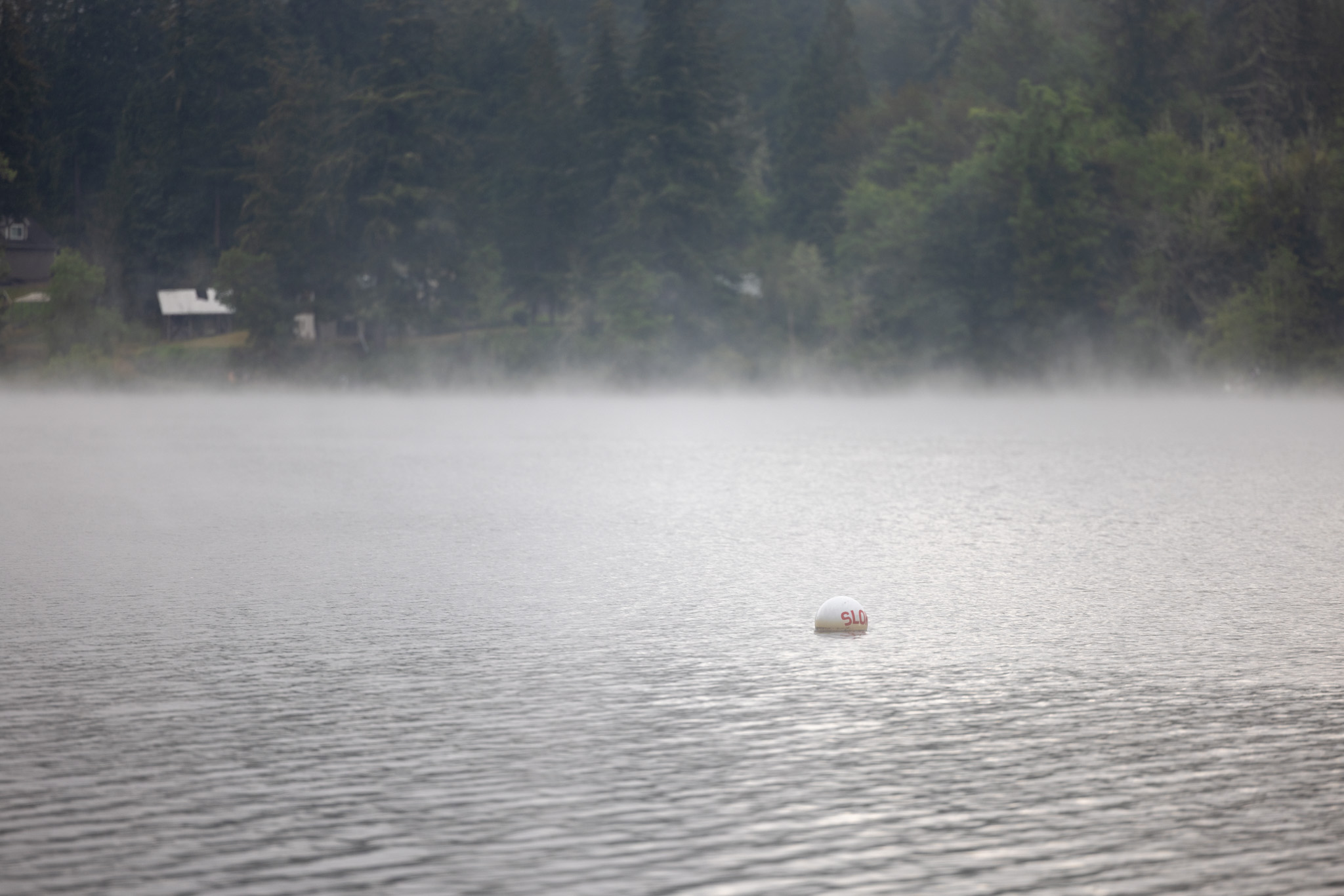
R and I arrived at the cabin with enough food for a couple of days and very little ambition beyond getting to Mount Rainier on Wednesday. The lake occupied most of the view from the windows. There was a dock, a gravel drive, and that particular quiet found around water, where sounds seem to travel farther without becoming any more urgent.

Lake culture has always had a powerful effect on me. I have felt it at the family lake cabin back east, at Tahoe, and now here. The places themselves are quite different. Georgia has deciduous trees, summer heat, and a kind of green that grows heavy by August. Tahoe has granite, cold water, and a scale that makes the opposite shore feel like another jurisdiction. This lake was thoroughly Pacific Northwest, with evergreens crowding the shoreline and fog waiting in the trees.
None of those differences seemed to matter to the part of me that responds to a lake. Within an hour, I could feel myself begin to unwind. My shoulders dropped, and the ever-present urge to solve or fix something faded into the background. I did not become someone new at the cabin. I simply became familiar to myself again, which had been harder than usual since the layoff.


I had spent thirteen years in an industry where tenure is rarely celebrated. Everyone knows this from the start, much like a motorcyclist knows rain is always a possibility. Awareness does not keep you dry. When the end arrived, I could see that larger forces were in play, but knowing something and truly absorbing it are not the same. The organization made its decision, and over time I let that decision color my view of all thirteen years.
Around the cabin trip, R and I spent time with three former colleagues. The conversations happened in ordinary moments. We were simply talking, first before the trip to the lake and then twice after we returned. Work came up because it was the large piece of history we shared, but the conversations were not really about the company. They were about how we had known one another inside it.
What caught me off guard was the consistency. Each person used different words, but they seemed to be describing the same man. He had convictions. He usually entered a discussion with a clear position and could explain the reasoning behind it, yet he also had the humility to change his mind when someone brought a better idea. Finding the right answer mattered more to him than being recognized for it. He was technically strong, understood his customers, and gave his team a foundation they could rely on. He also made himself available. If someone needed help working through a problem or wanted advice about the next step, his calendar was open.

I knew this person. I just had not been giving him much credit lately.
Their comments did not feel like feedback offered to someone having a difficult year. These people had seen me when projects were going well and when the route forward was not clear. They had disagreed with me, depended on me, and watched me hit home runs and foul balls. Their views had formed over years, which made them considerably harder to dismiss.
Their words humbled me and left me quietly stunned. None of what they said was entirely new, and perhaps that was what struck me most. They were not presenting a better version of me. They were reminding me of someone I had forgotten. They remembered the middle, while I had been focused only on the ending.
R was there for all three conversations. We have been through enough together that he has heard nearly every version of my thoughts, including several that could have benefited from a shorter running time. He knew what the layoff had done to my confidence because he had lived beside it. Having him hear these people directly meant neither of us had to rely on my retelling afterward, screened through whatever doubts I happened to be carrying that day.
He told me later that the conversations had shown him more of who I had been at work. He already knew who I was as a partner and as a human. Now he had heard people from another part of my life describe the way I showed up when he was not there—the judgment I brought, the work I could do, and the time I made for the people around me. We could process that together too.

Somewhere in those conversations, the cabin offer started to make sense. My colleague had not handed his family’s place to a stranger. He remembered someone who had made time for him years ago, and he held onto that moment even though, to me, making time for people was simply what I did. The trust that surprised me had been built on a history I helped create and then lost sight of during the past few months.
Wednesday at the lake was clear, and Rainier stood above the horizon looking permanent. We spent the day at Paradise, where the mountain was so large and close that it seemed to alter the scale of everything around it. By Thursday morning, it was gone. Clouds covered it completely, and fog settled among the evergreens on the far shore.

Then the storm came across the water. The lightning and rolling thunder felt more like Georgia than Washington. It was the sort of storm I knew from Southern summers, loud enough to make itself the only subject in the room. Yet it moved across a landscape of fir trees and cold gray fog, which made the whole thing feel equally familiar and displaced. Weather from one part of my life had somehow found me in another.

The cabin did not solve anything in the usual sense. It did not bring a job, undo a decision, or offer a clever new plan. Time by the lake brought me back to the person I was outside of work, and the people I had known through work offered a clearer picture of what I had actually contributed.
I arrived thinking I had a long way to go in rebuilding myself. I left Seattle realizing that much of the work was already done. Thirteen years had built judgment, skill, conviction, and the habit of making space for others to grow. Losing the job had not erased any of that. I had just forgotten to count it when taking stock.
The org chart once mapped how we related to one another. It could not explain why the relationships lasted after my name was gone or why their view of me still mattered so much. The chart recorded where I sat. They remembered who I was.

In the days that followed, I kept returning to the view as R and I drove away from the cabin. The lake slipped away in the mirrors, and Rainier stayed hidden behind the storm.
We couldn’t see the mountain, but we knew it hadn’t gone anywhere.
#thankYouSeattle ❤️





Leave a Reply