
This article is part of the series Life at the Pace of Sweet Tea, a 15 part series across the Deep South learning about identity, aging, adventures, and home.
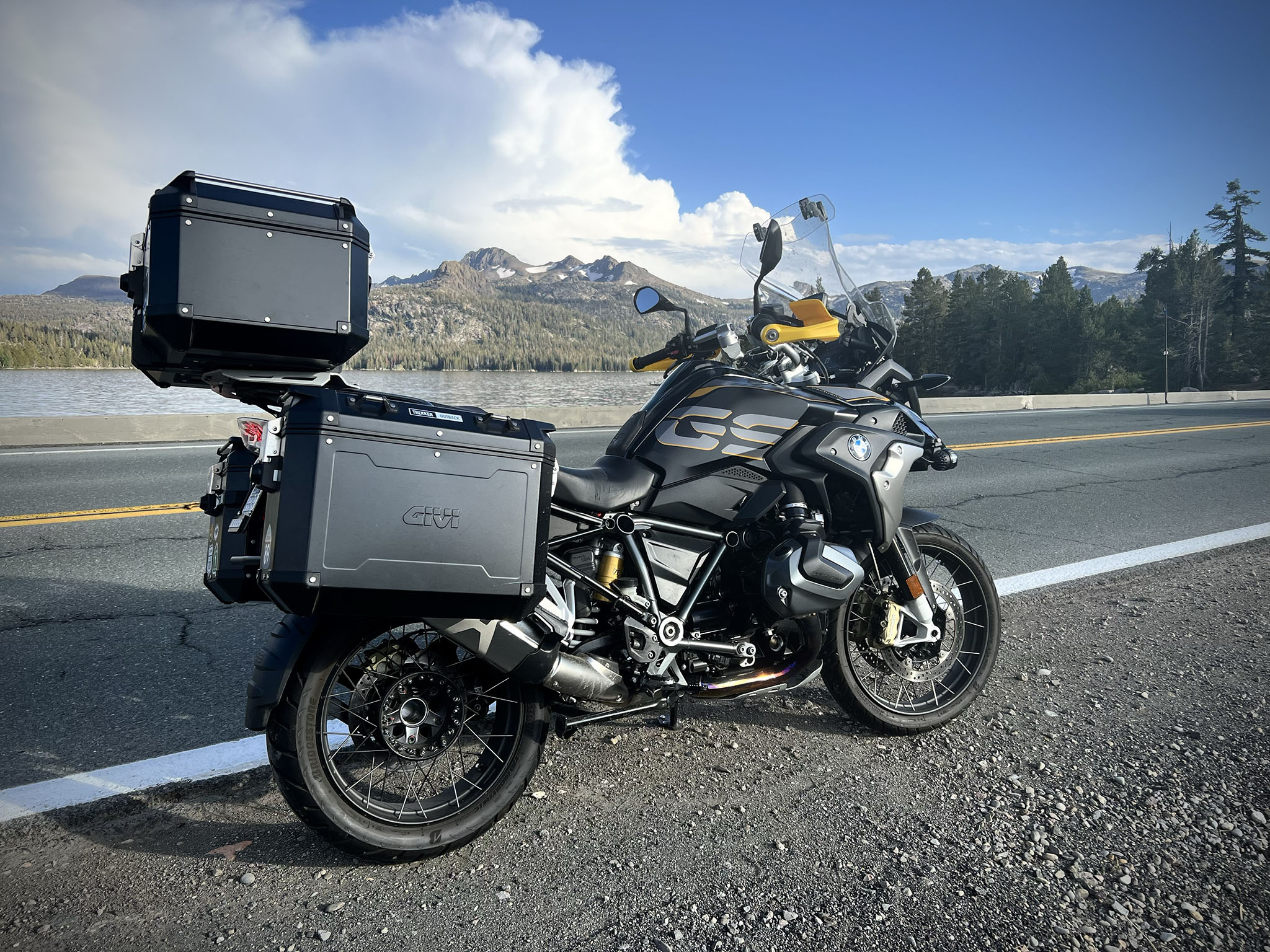
The sensible thing would have been to point the GS toward Atlanta and take Georgia 400 south.

The previous few days had been heavier than expected. Saying goodbye to the lake had hit harder than I thought it would, and somewhere in the middle of processing all of that, a vial of insulin decided to go bad. Insulin above a motorcycle exhaust sent me racing across the lake to a pharmacy before they closed for the evening. By any reasonable measure, I’d had enough adventure for one week.
I pointed the motorcycle north anyway. Rear brakes be damned.
Growing up, one rarely appreciates the geography in the moment (unless you are that kid that grew up on the shores of Lake Tahoe). When you’re fifteen, the mountains aren’t scenery. They’re where the campouts are. They’re where your friends are. They’re where the roads go when you have nowhere else to be. It wasn’t until years later — after moving west and spending countless weekends chasing mountain passes and alpine lakes across California — that I realized how much of my internal map had already been drawn here.
The lake and the mountains occupied different corners of my life. The lake belonged to family. The mountain adventure belonged to me and my community: scouts, friends in high school, and college fraternity brothers. These are the years when you’re slowly becoming yourself and don’t entirely realize it while it’s happening.
I wanted to connect those two stories before heading home. I just didn’t know that yet when I left.
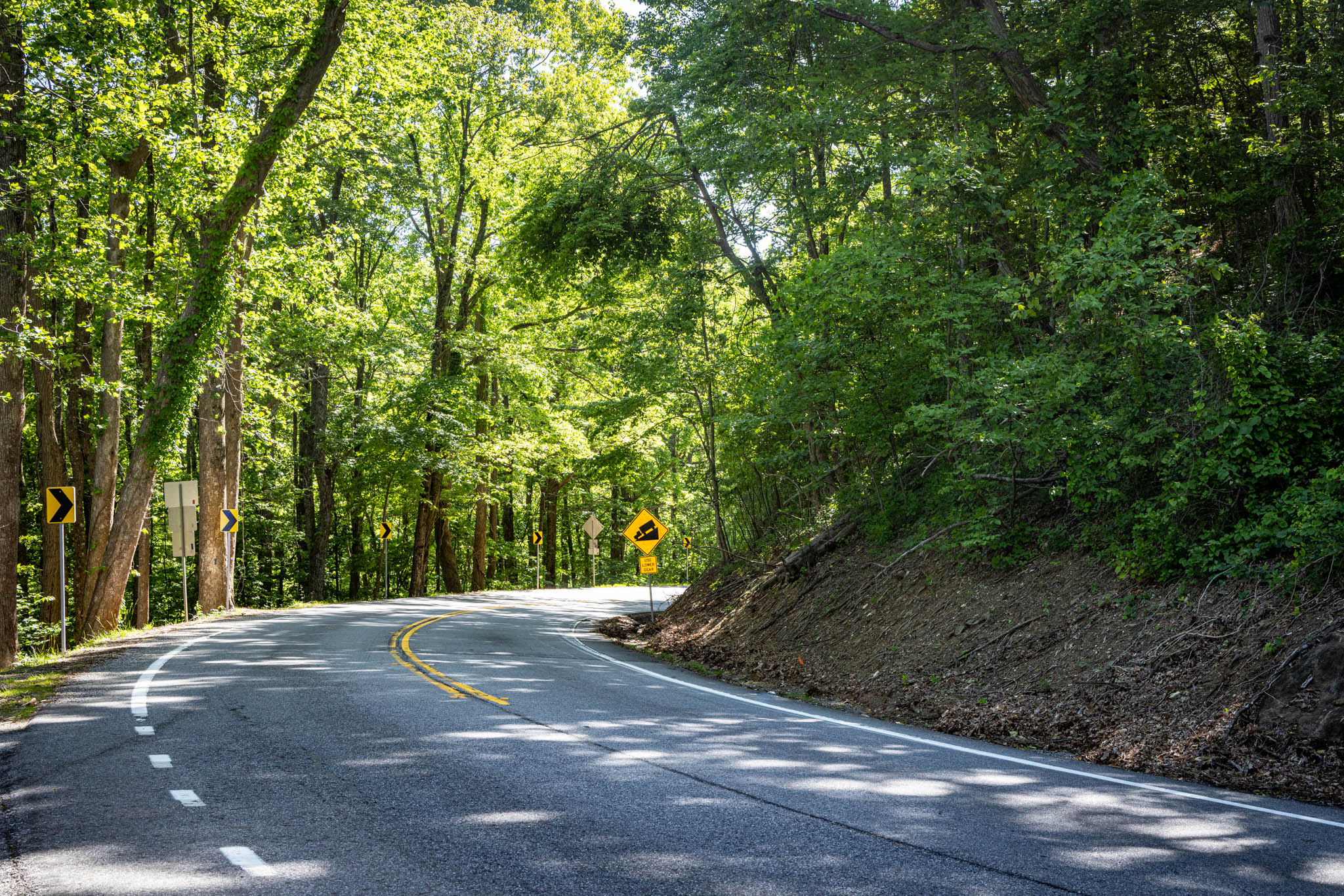
My route included Highway 53 winds west out of Dawsonville fading into Highway 183 before becoming Highway 52 toward Amicalola Falls. Roads I’ve traveled in one form or another for most of my youthful life. However the roundabout came to Georgia in a big way. Every one of those intersections had the flow of movement.

Somewhere along that stretch I found myself thinking about a Harley I rode through here at twenty years old. Calling it a poor decision would be generous. The bike was too large, my skills too limited, every corner a problem I hadn’t yet learned how to solve. At the time I thought I was riding. Looking back, I was mostly surviving.
The GS made the same roads feel entirely different. The corners hadn’t changed.
I had.

The Appalachian Trail symbols still appear throughout north Georgia as they did when I was 15 and hiking the trail, that weathered AT in a circle on buildings, trail markers, signs. My scoutmaster used to point them out every time we came through here. He was a good man doing his job, but if I’m honest with my fifteen-year-old self, he was something more specific than that. He was an adult who wasn’t my parents, and at that age that matters more than anyone tells you. That relationship defined why I wanted to spend my 20s and 30s working with teenage type 1 diabetics at youth camp.
My Scoutmaster left things in me I’m still finding — a habit of slowing at Stonepile Gap to acknowledge Trahlyta’s grave, the burial site of a Cherokee woman whose story he never let us pass without honoring. A memory of him reading Psalm 23 and Psalm 100 on campouts under these same trees.

Some habits survive longer than we expect. Others become part of us so gradually we stop noticing where they came from.

Amicalola Falls sits at the beginning of the Appalachian Trail approach route and has served as a gateway for generations of Scouts, hikers, and restless teenagers. I have history here too — including a college detour where I drove two fraternity brothers up from Atlanta airport so they could start their through-hike at Springer Mountain. They needed a lift. I volunteered, because I tend to sign up for these things. In exchange they let me hike sections with them, so I’d walk a stretch, drive into town to resupply for everyone, meet them at the next trailhead, and repeat. They got a comfortable ride through Georgia. I got good people for a season and a real taste of what the trail feels like — Diet Appalachian Trail, but I’ll take it.

Amicalola Falls is a terrible park to photograph your motorcycle with mountains in the background, for the record. You have to get off the road to really see it, same as Zion and very unlike Bryce or Yosemite. A different design philosophy entirely. I took my mild disappointment and kept moving.

The farther north I rode, the more memories seemed to surface without being asked. Georgia 60 north of Dahlonega climbing through Woody Gap. Signs for Suches and Lake Winfield Scott. Names that meant little when I was young and mean more now, which is how landmarks in your own history surface. The GS found its rhythm and I let it.
At Two Wheels Only I met a rider with two immaculate Kawasakis parked under a canopy shade tent he’d set up in the yard. We talked motorcycles, Georgia, California — the kind of conversation that happens naturally when two people have nothing to do but stand in the shade and compare notes. Out on the road a steady stream of bikes went by without stopping. I watched for a few minutes, said my goodbyes, and kept moving.

Highway 19 carried me up toward Neels Gap and the Walasi-yi Center.
Walasi-yi — from the Cherokee, meaning place of the frogs. It’s the only building the Appalachian Trail actually passes through, a stone structure built by the Civilian Conservation Corps in the 1930s. I’d grown up hearing that name without ever questioning it. Time in Canada and a growing attention to what indigenous place names are actually saying has changed how I listen. Names tend to survive because they describe something deeper than geography. They describe relationship.

I parked the bike and went inside.
The host asked where I was from. It’s a question that gets more complicated as you get older. I gave him the short version — California, parents, the lake, the motorcycle, a few days wandering through the mountains before heading back toward Atlanta.
He nodded, smiled, and said it like it was the most natural thing in the world.
“Welcome home.”
It’s something to hear words. It’s very different to feel them.
I’ve thought about that moment a lot since. Not because it was dramatic — quite the opposite. It was warm and easy and matter-of-fact, the kind of thing someone says without realizing it might matter. Southern culture has a particular way of meaning what it says, and standing in that stone building at Neels Gap, surrounded by a landscape that had been quietly shaping me since I was fifteen, those two words arrived with a weight I wasn’t prepared for.
The lake had reminded me where I came from. The mountains reminded me who I became there.

Coming down the backside of Neels Gap I settled into a good cadence with a couple of cars, right up until I passed an ancient diesel truck belching something genuinely terrible out of its exhaust on the downhill. After clearing the last car my eyes locked onto a Georgia State Patrol officer with his radar gun pointed directly at me. I eased off, completed the pass as casually as I could manage, and watched the mirror through the next several turns.
He stayed put. I kept moving.
In a perfect world I would have stayed longer — Richard Russell Scenic Highway, Highway 75, more mountain before the city. Time is a finite resource. Google Maps threaded me through secondary roads I couldn’t name before depositing me onto Highway 115 and eventually Georgia 400 south.
Georgia 400 is designated a hospitality highway. It also hosts both Bottoms Road and Cumming, GA within a few miles of each other. As a gay man who grew up in one of the more aggressively conservative corners of the South, I have to think somebody in the Georgia DOT had a sense of humor — or at the very least, impeccable timing.
Atlanta arrived the way it always does — aggressively, and with far more traffic than seems remotely necessary. Dinner was with a friend from my old team. Ribeye, grilled shrimp, thick-cut fries, and a few days of genuinely good company.

I rode back the next morning with both parts of the trip settled. The lake and the mountains. Family and friends. Two different formation stories, two different parts of the same person.
Goodbye and welcome home.
Route:


Leave a Reply