
For over 15 years, every Wednesday at Camp Sequoia Lake, we’d hike to the Grant Tree.
The camp sat just outside Kings Canyon National Park — a week each summer for teenagers with Type 1 diabetes, up in the Sierra where the air is thin and the trees are enormous. This is a very special part of the world for me on a few different levels. Wednesday was always the big hike day, and the Grant Tree was the destination. Every year, different kids. Same tree. Same moment when they’d look up and go quiet after an hour of fighting the trail. Then, whatever the word of the day was — cool, rad, gnarly, or something I’d not heard of — delivered with the particular energy of a teenager who didn’t want to admit they were fully impressed. The words changed every year. The sentiment never did.
In all those years of camp, I never made it down to see General Sherman.
The Grant Tree lives in Kings Canyon, bearing the name of the Union Army’s most celebrated general — born Hiram Ulysses Grant, a name he shed by accident when a congressional clerk fumbled his West Point paperwork and enrolled him as Ulysses S. Grant. The S stood for nothing. He kept it anyway.

Amongst giants, you get humble fast. In the same moment, you get free.
Sherman — Grant’s counterpart and the architect of the March to the Sea — carries the middle name of a Shawnee chief his Ohio father deeply admired. That same name went on to power a different kind of American institution: Tecumseh Manufacturing became one of the premier small engine companies in the country, the brand inside millions of lawn mowers, snow blowers, and generators sitting in garages across America. His tree, down the road in Sequoia National Park, is the largest living thing on earth by volume. I’d driven past the turnoff more times than I can count, always hauling gear, always on a schedule, always wanting to get back to my own bed after a week on a foam pad and plywood. This was finally the trip to fix that.
Dimples Diner, Visalia
D is a longtime friend who lives in Southern California. We’re the kind of people who are rarely in the same place at the same time, but when we cross paths, we make it count. He wanted to meet for breakfast at Dimples Diner in Visalia before heading up into the park. That worked for me — I needed to charge the Rivian anyway.
Charging in this part of California is available, but it’s not ubiquitous once you leave Highway 99. I’d found Visalia Ford on the map and braced for the usual dealer runaround — the “sorry, our charger is for Ford customers only” conversation I’ve had more than once. That’s not what happened. A salesperson met me on the lot, pointed me toward the charger, and specifically called out which one was the 350 kW unit. No app. No account creation. No typing a credit card number into a screen the size of a postage stamp. Just tap and charge. I actually preferred the slower charger so breakfast could be leisurely — and I mentioned that, and they pointed me to it without batting an eye. What a concept.


Dimples Diner delivered in all the right ways. Ham and cheese omelette — solid. Hashbrows — yes. Biscuit — good, but I never got there. The hashbrowns, though. I told the waitress I wanted them crispy. She nodded. I pushed back and said no, I mean really crispy — grilled to within an inch of their life. She laughed and said they could do that. She and the chef were not messing around. I’d go back for those hashbrowns alone.

Up Highway 198
We wound our way up Highway 198 through the foothills, passing through towns like Three Rivers — the kind of place that looks exactly right on an Airbnb listing and nothing like what it used to be. Someone distant is making money on recreation and tourism out here. It’s just not the people who call the town home and it’s cancerous to these communities. Everyone wants to go to an AirBnB, but no one in the suburbs want to live next to one back home.
South Lake Tahoe tried to do something about it — voters passed Measure T in 2018 by a margin of 58 votes, banning short-term rentals in residential neighborhoods. The courts struck it down in 2025. The city passed new rules anyway. The fight isn’t over, but the fact that it takes a ballot measure and years of litigation just to keep your community intact says everything about who the sharing economy actually shares with.

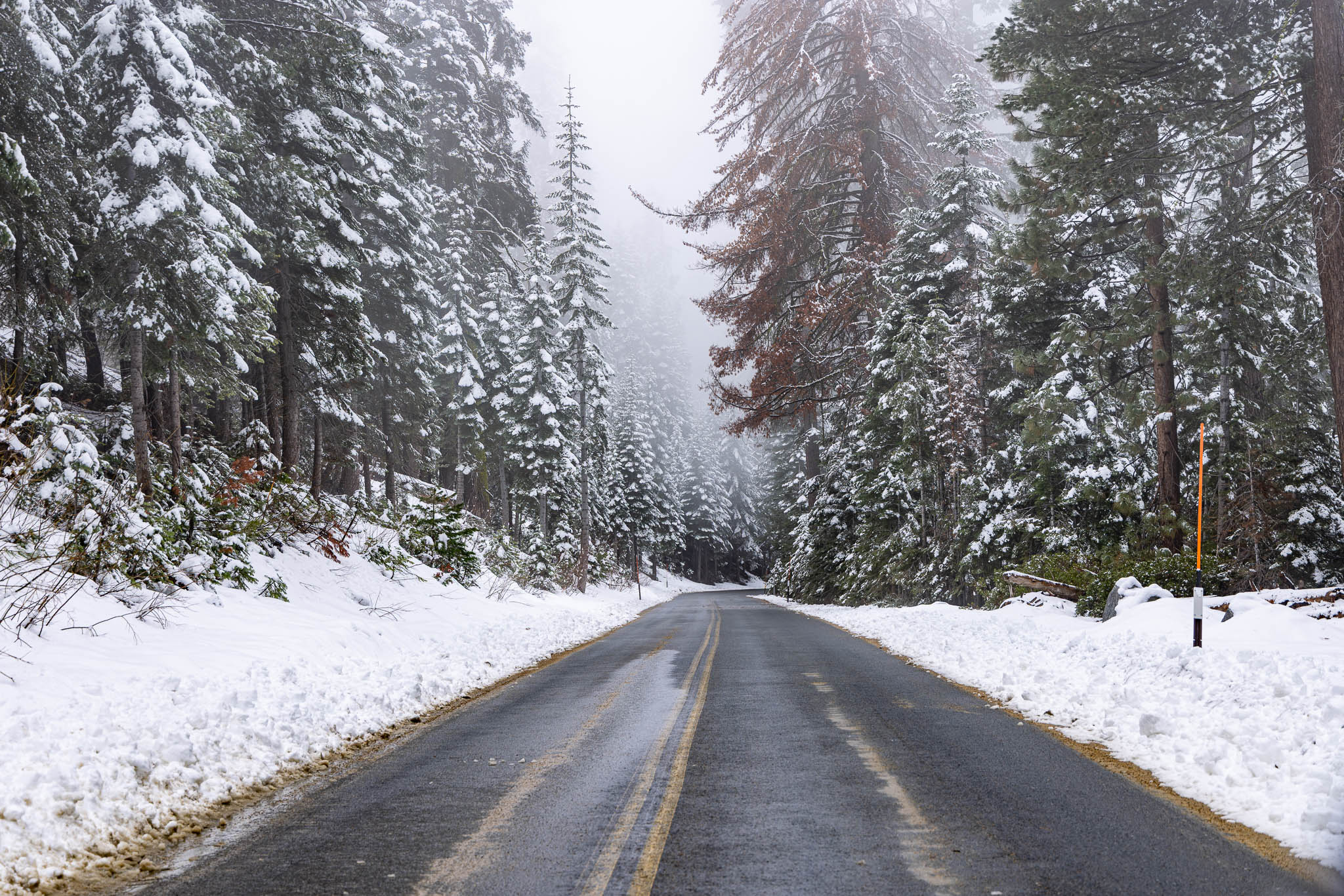
As we climbed, the sun gave way to fog, and the fog eventually gave way to snow. It happened gradually, then all at once — the way weather changes in the mountains when you’re paying attention. Every thousand feet brought a different landscape. The trees held snow on their needles. Gentle winds sent it fluttering through the air in small bursts. We were getting somewhere.
Walking amongst Giants: Hunting for the Sherman Tree
The lower parking lot at the General Sherman trailhead had four standard spaces. All four were taken. What it also had was a significant number of accessible spaces — all empty. We looked at the map, noted the overflow lot just up the hill, and headed there. It was roped off. Covered in snow. Not happening.
We kept driving until we found a plowed pullout higher on the mountain, got out, and spent some time just being in it — more snow up here, pine boughs weighted down, patches of sun breaking through the clouds. Worth the stop on its own merits. Then we drove back down, and one of the four spaces had opened up. Parking gods. We took it.
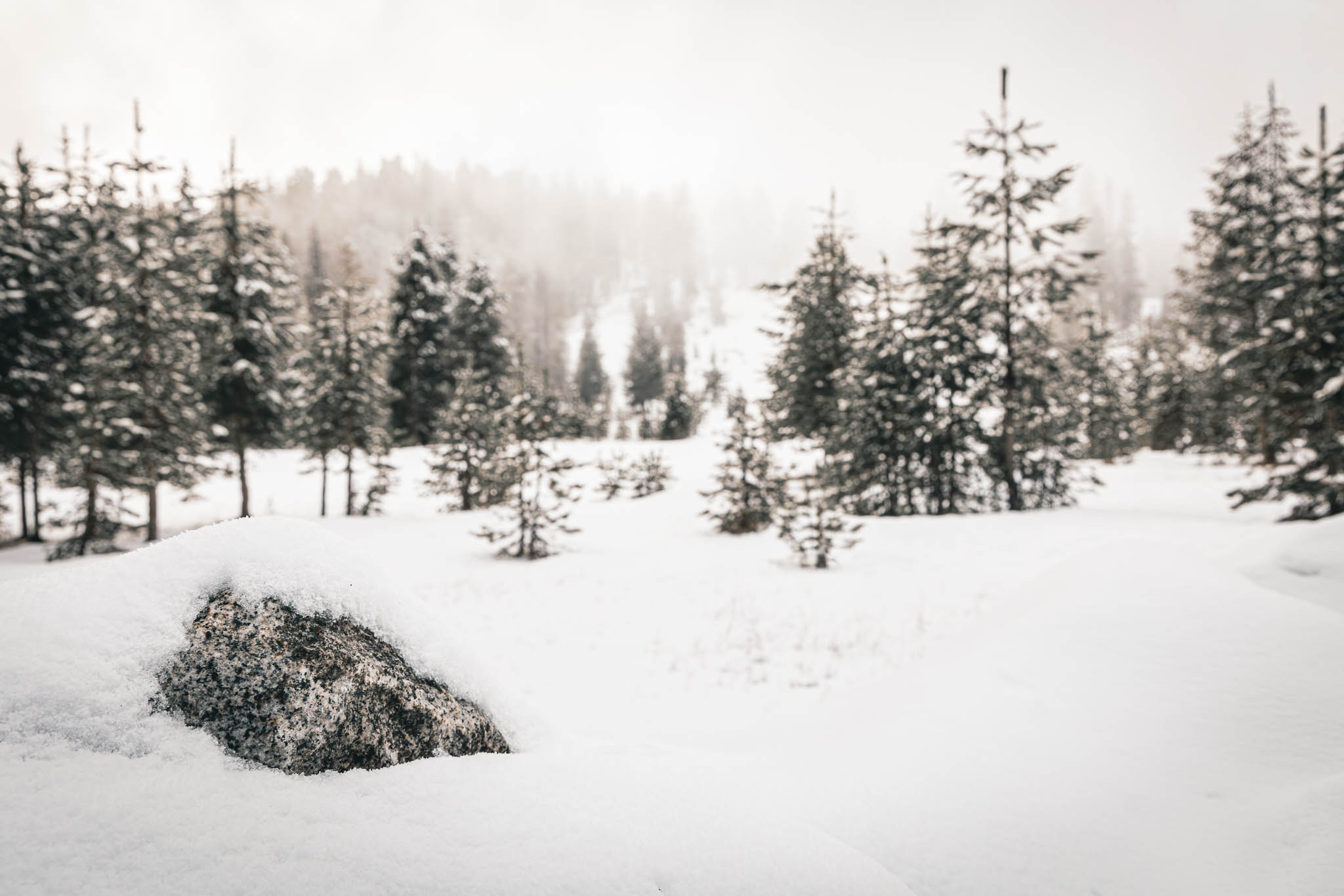
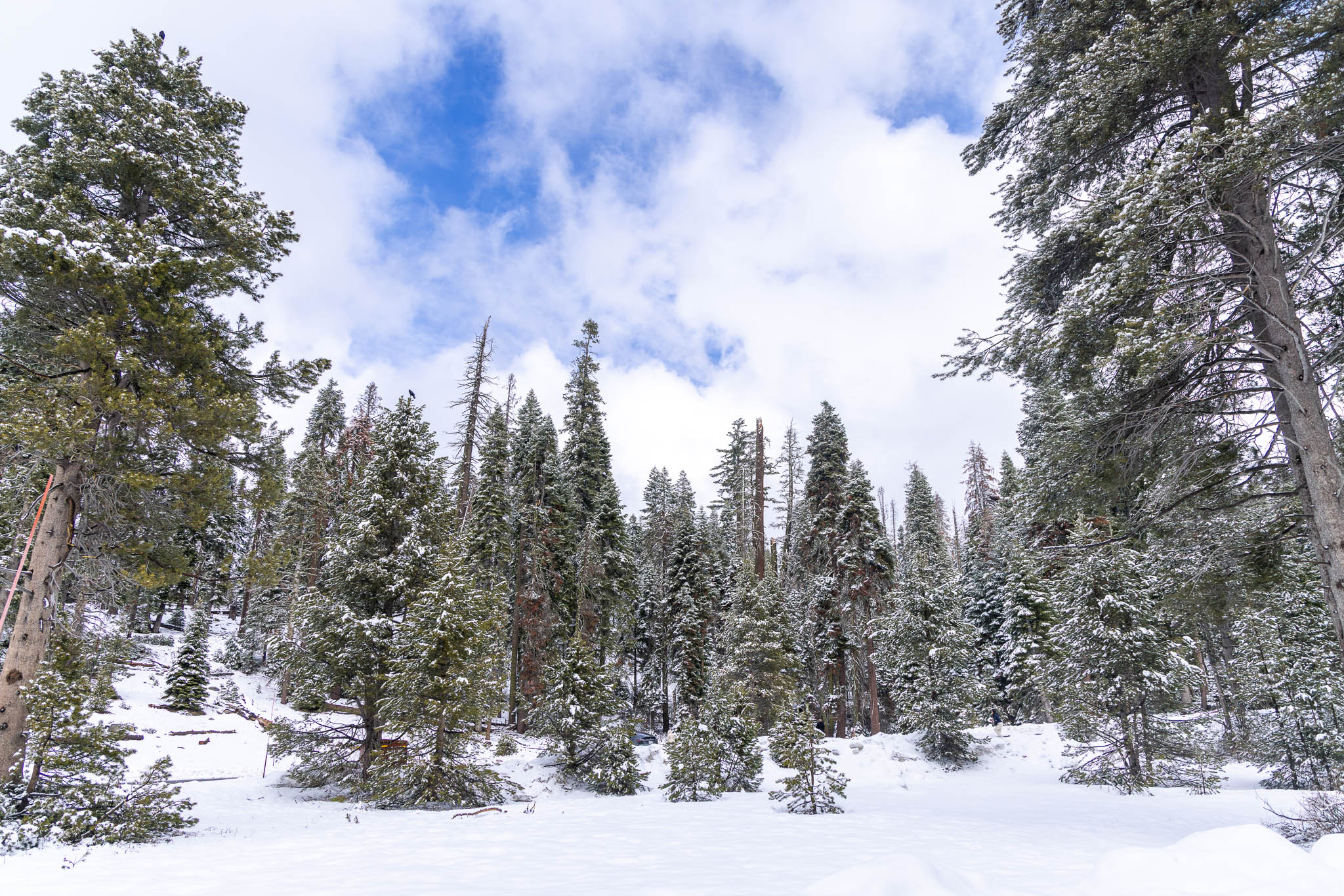

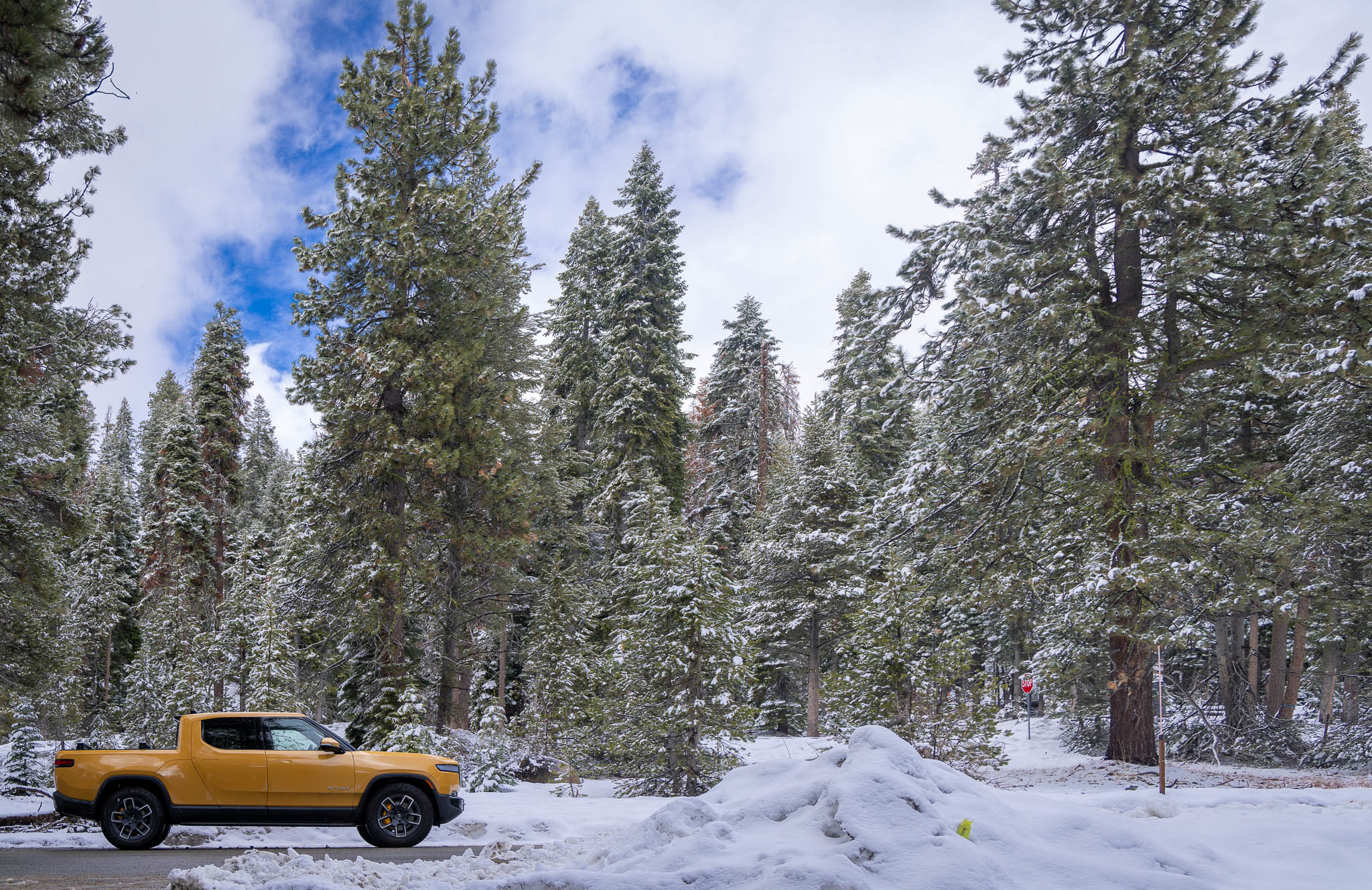
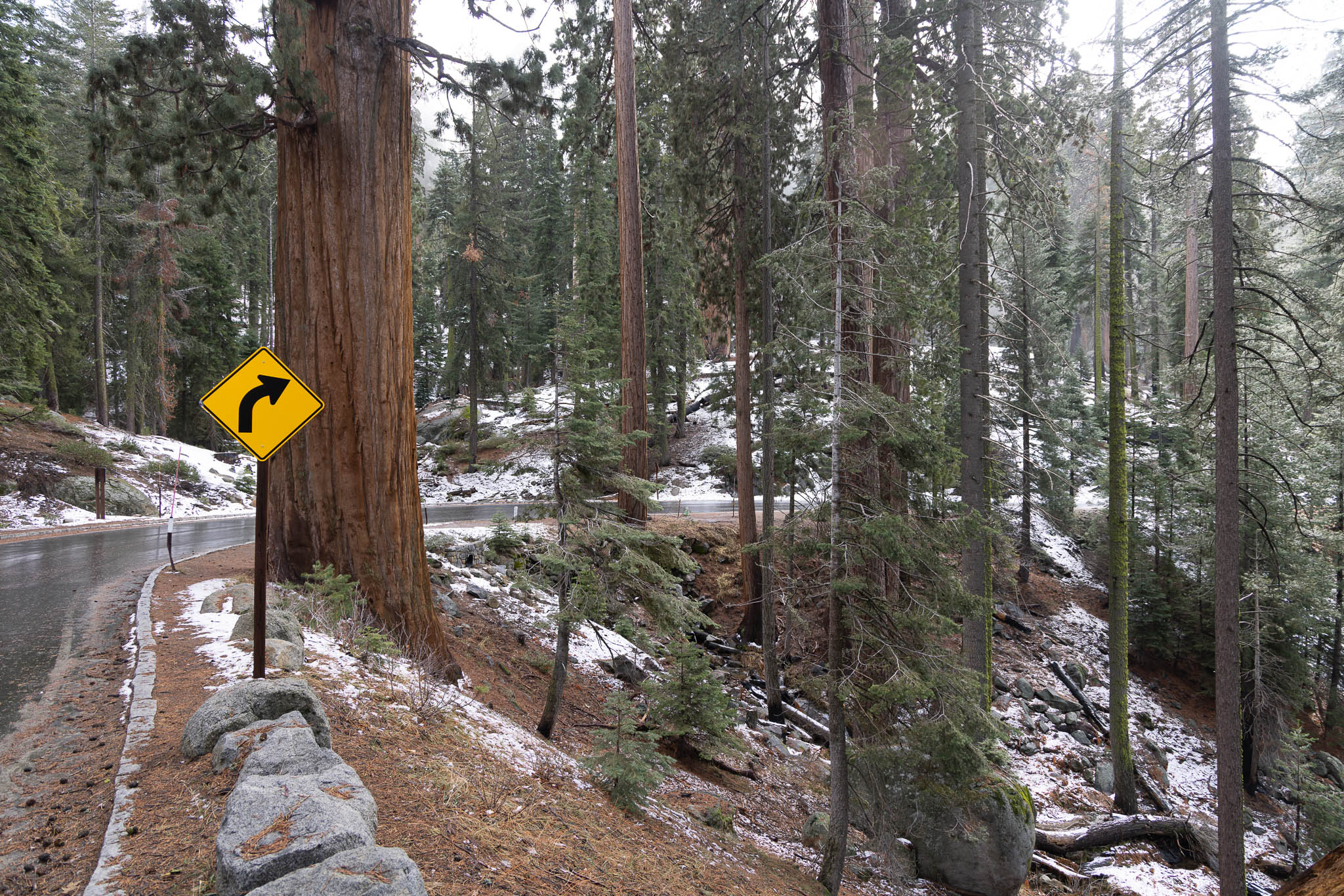
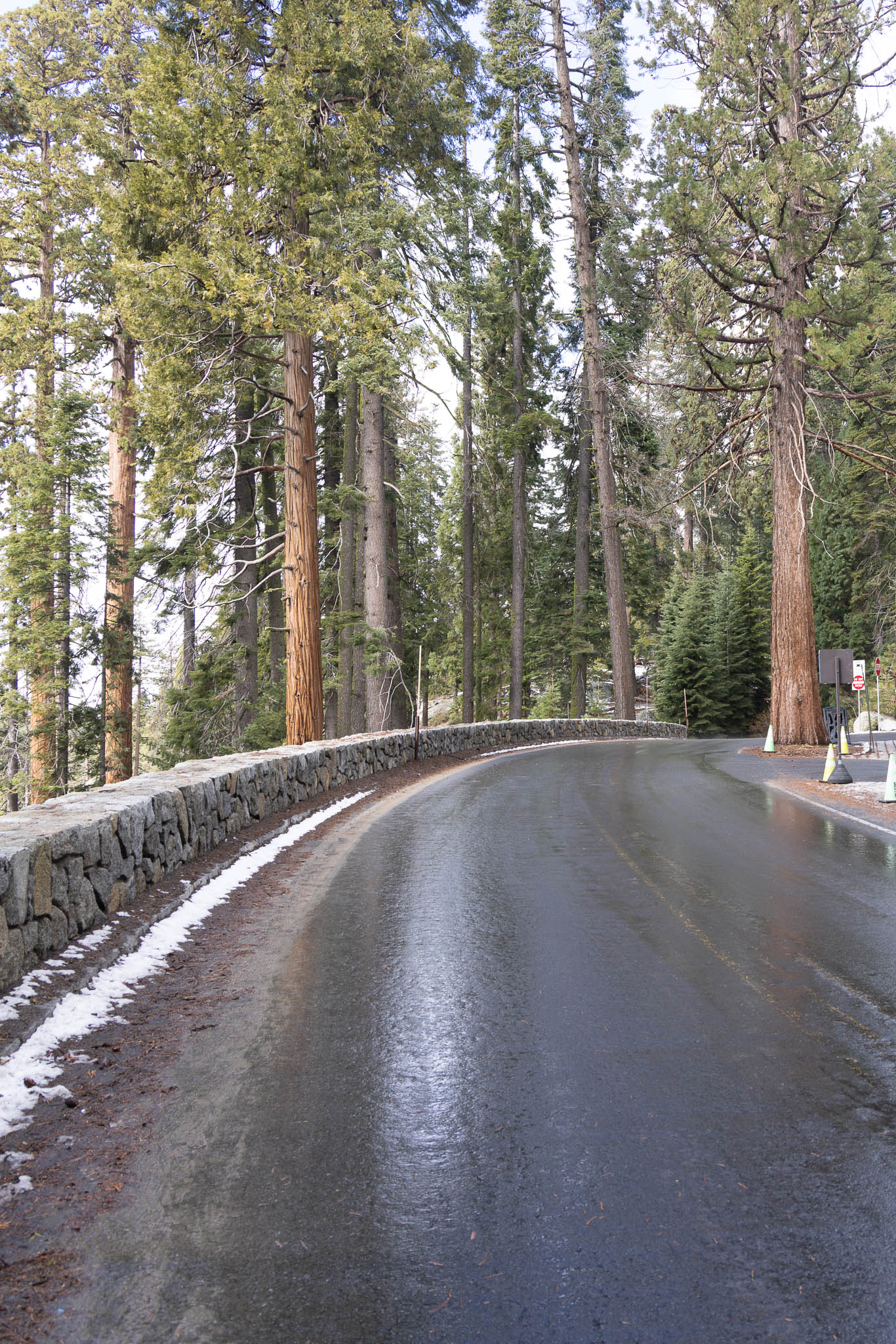
From the lower lot, we followed the sign that said Sherman Tree and headed in. The trail wound through the grove, and we walked it, and walked it, and eventually arrived at — a parking lot. A different parking lot. We stood there reading the signage, genuinely confused, until we found a notice explaining that the accessible spaces at the lower lot were open to all visitors during winter months.
So that’s why they were empty. Good to know. It would’ve been more useful as a sign at the lower lot, but here we are.
At this point it also dawned on us that we had hiked the entire trail from the overflow lot direction and walked straight past the Sherman Tree without seeing it. We had been among giants and missed the biggest one entirely. Cell service was thin, maps were slow to load, and the forest has a way of making everything look significant. That’s actually part of the point — you are genuinely among giants up there, and the Sherman Tree doesn’t announce itself the way you’d expect the world’s largest living thing to announce itself.
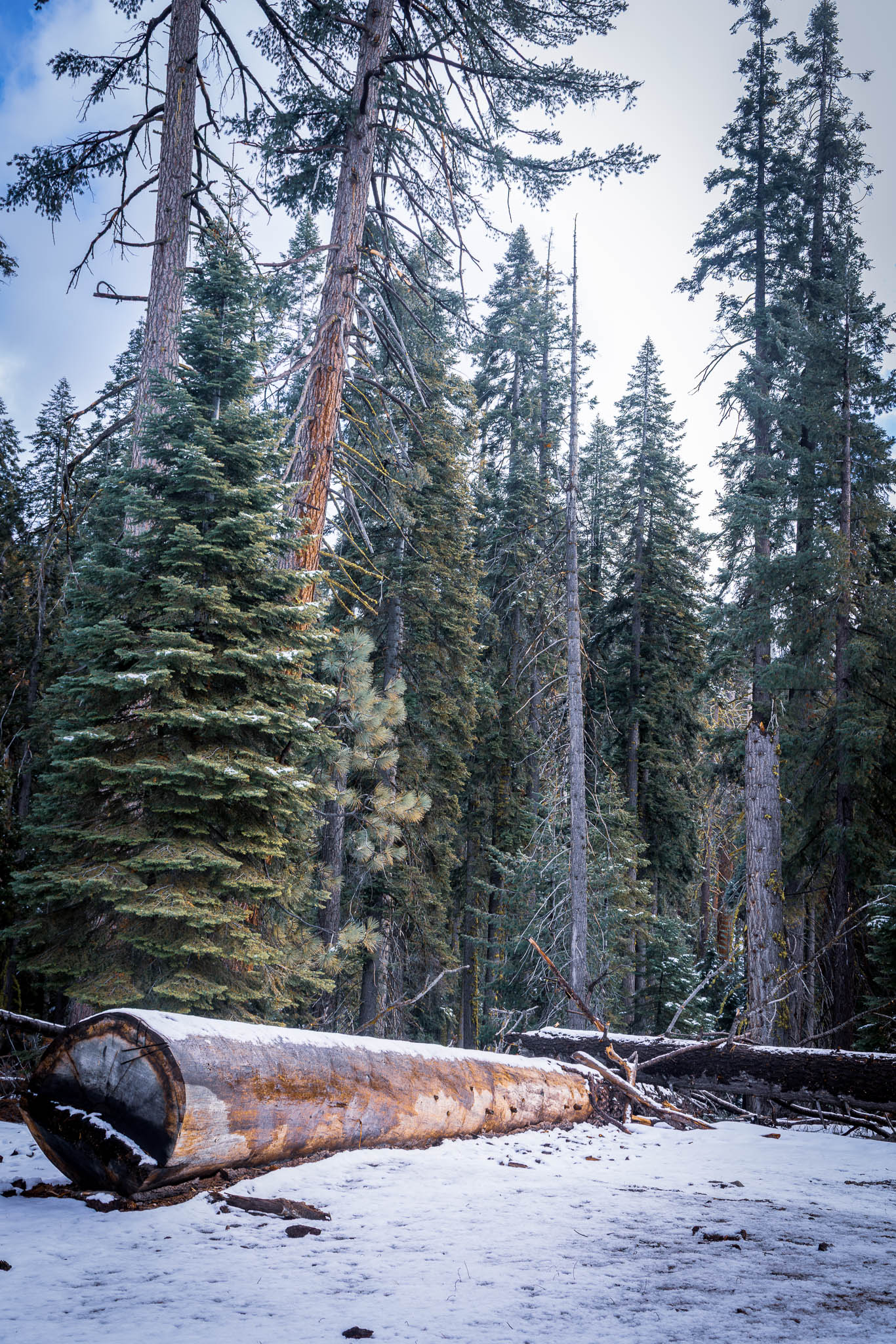
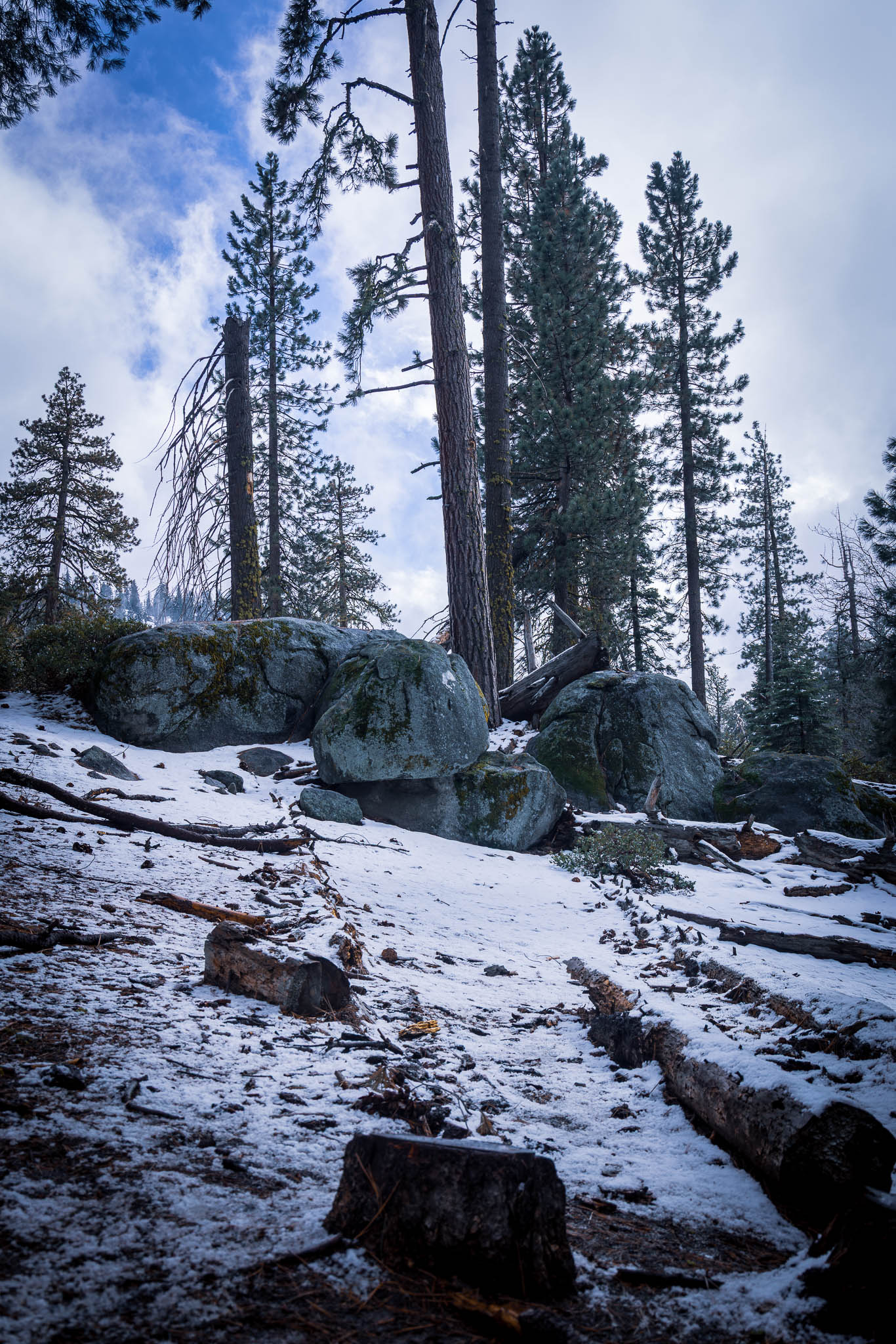
Back at the lower lot, we finally figured it out. Turn left. Not forward. Left.
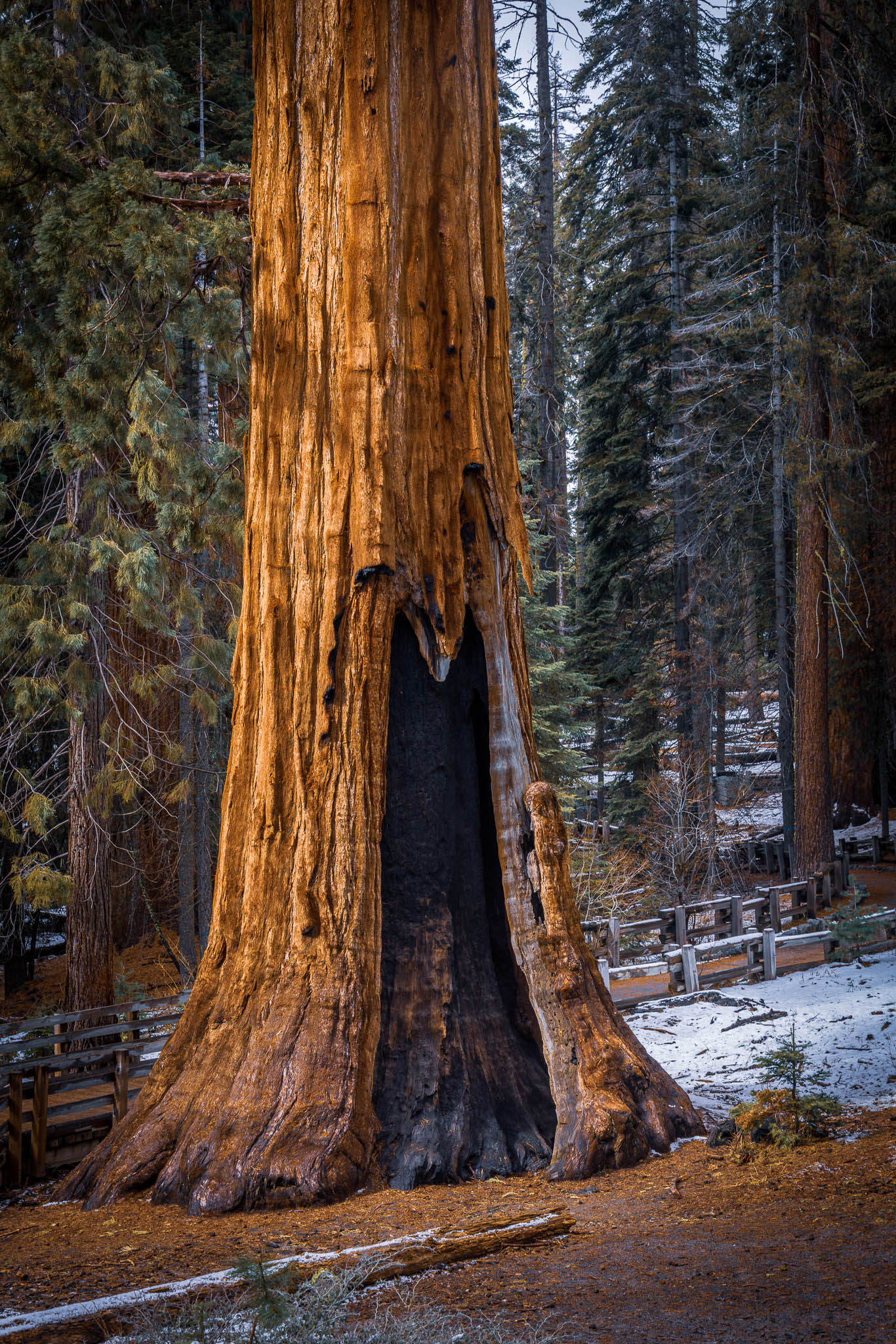
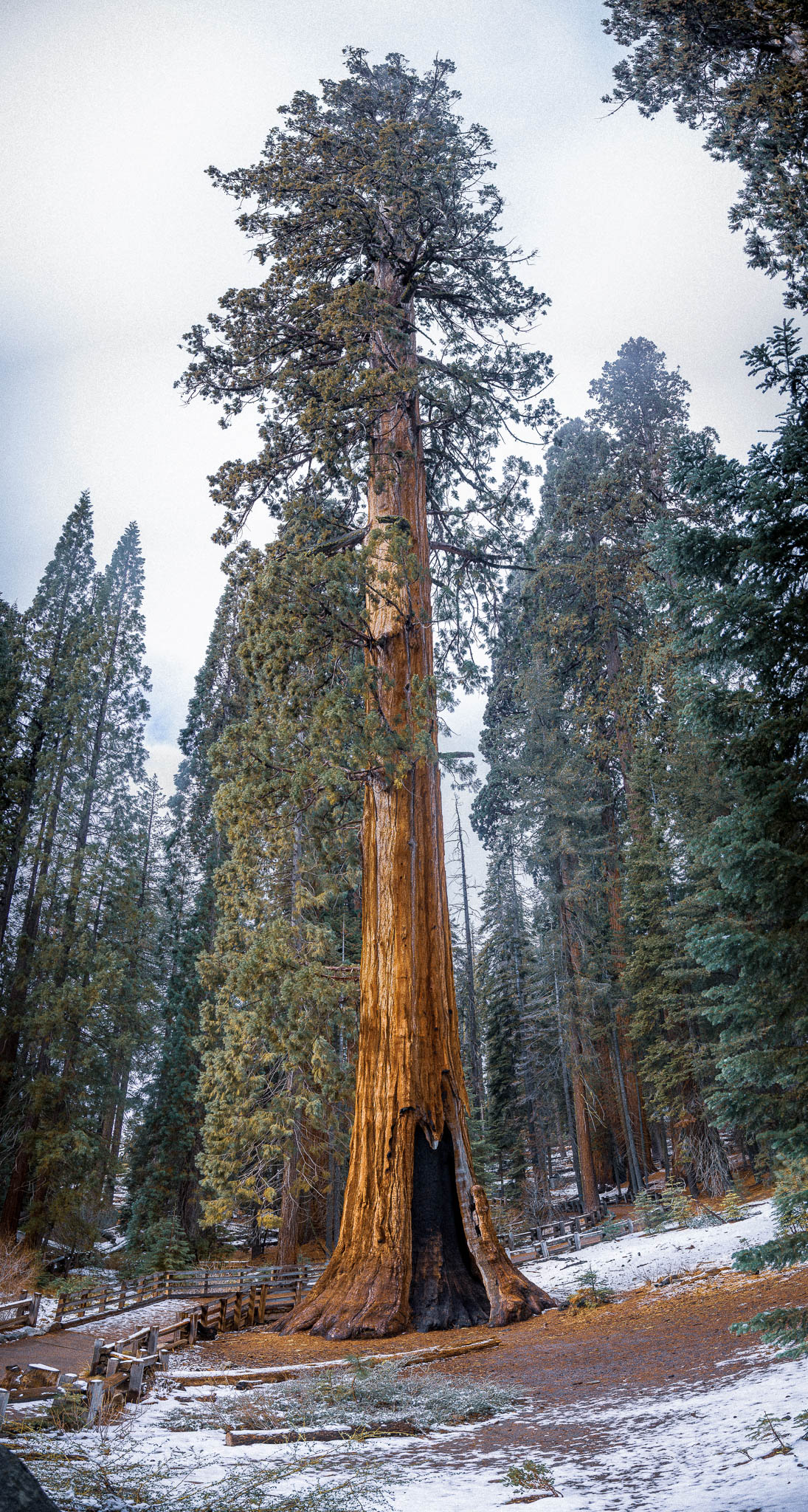
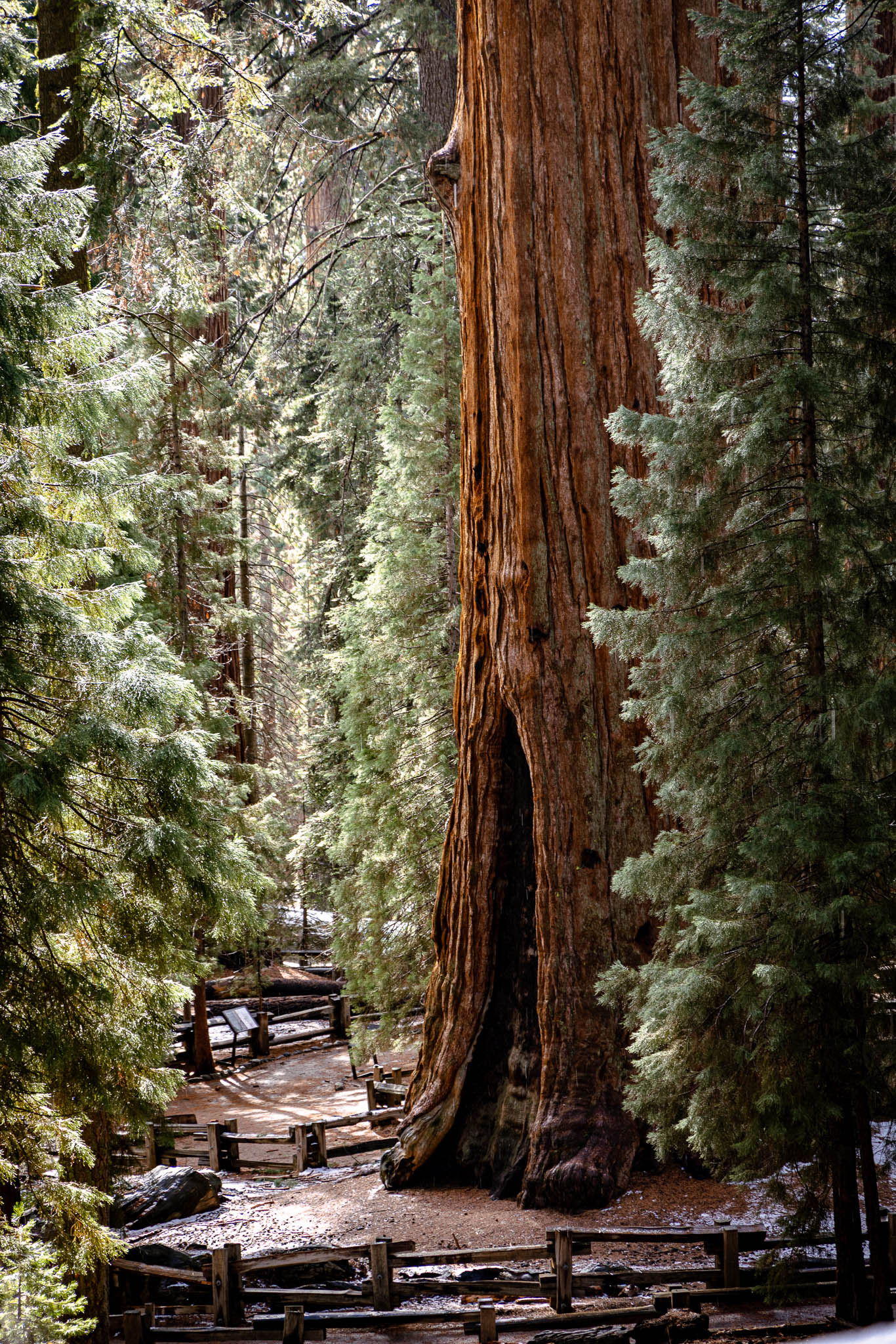

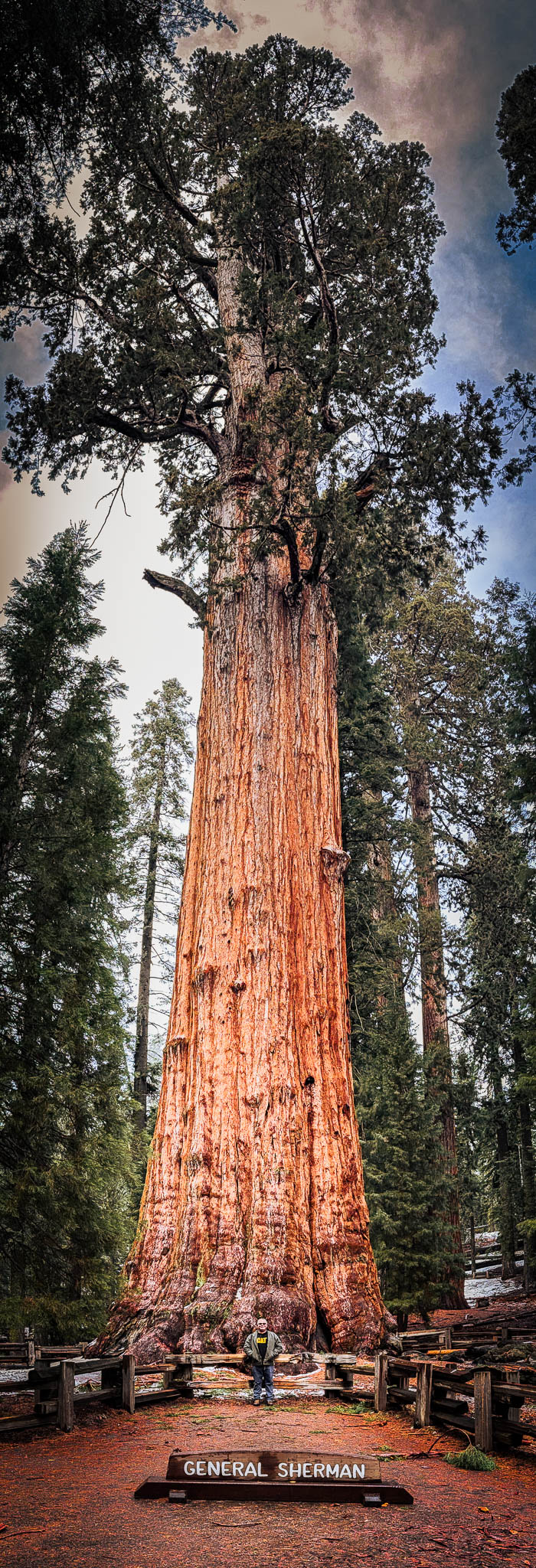
The Sherman Tree is a beast. The top has died, but the sheer mass of the living wood below continues to grow, which is why it still holds the title of the world’s largest living thing by volume — even though not all of it is technically alive. I’m still working through the philosophical implications of that one. What I can tell you is that standing next to it, the scale doesn’t compute. Your brain keeps trying to find a reference point and keeps failing. That part felt familiar — the same quiet the kids at camp always had when they first saw the Grant Tree, just bigger.
We spent about two hours in the grove, wandering, getting intentionally lost, watching the afternoon light shift behind the clouds. Temperatures were in the mid-30s when we arrived and felt meaningfully colder by the time we decided to move. That was the cue.
Back Down Through the Fog
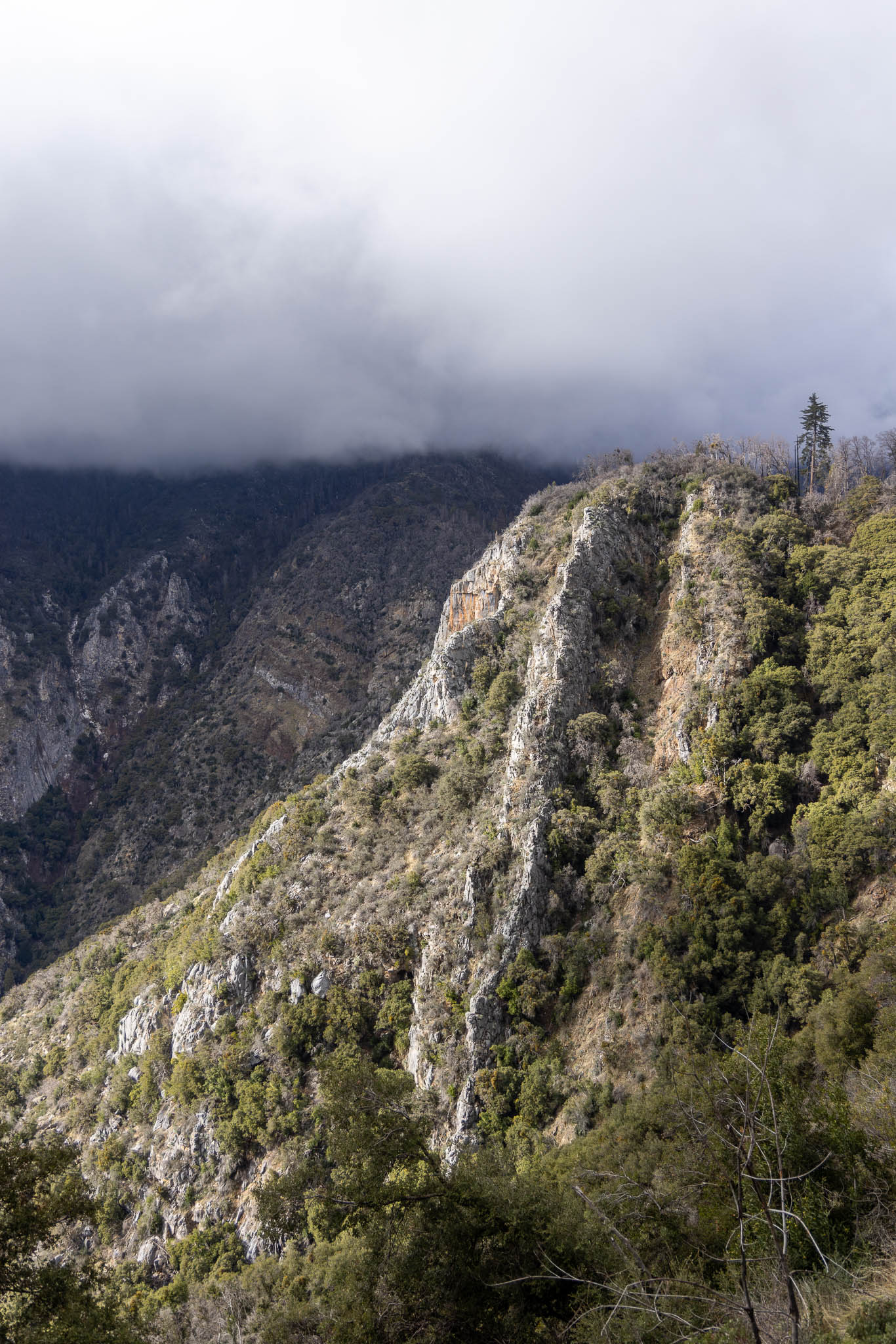
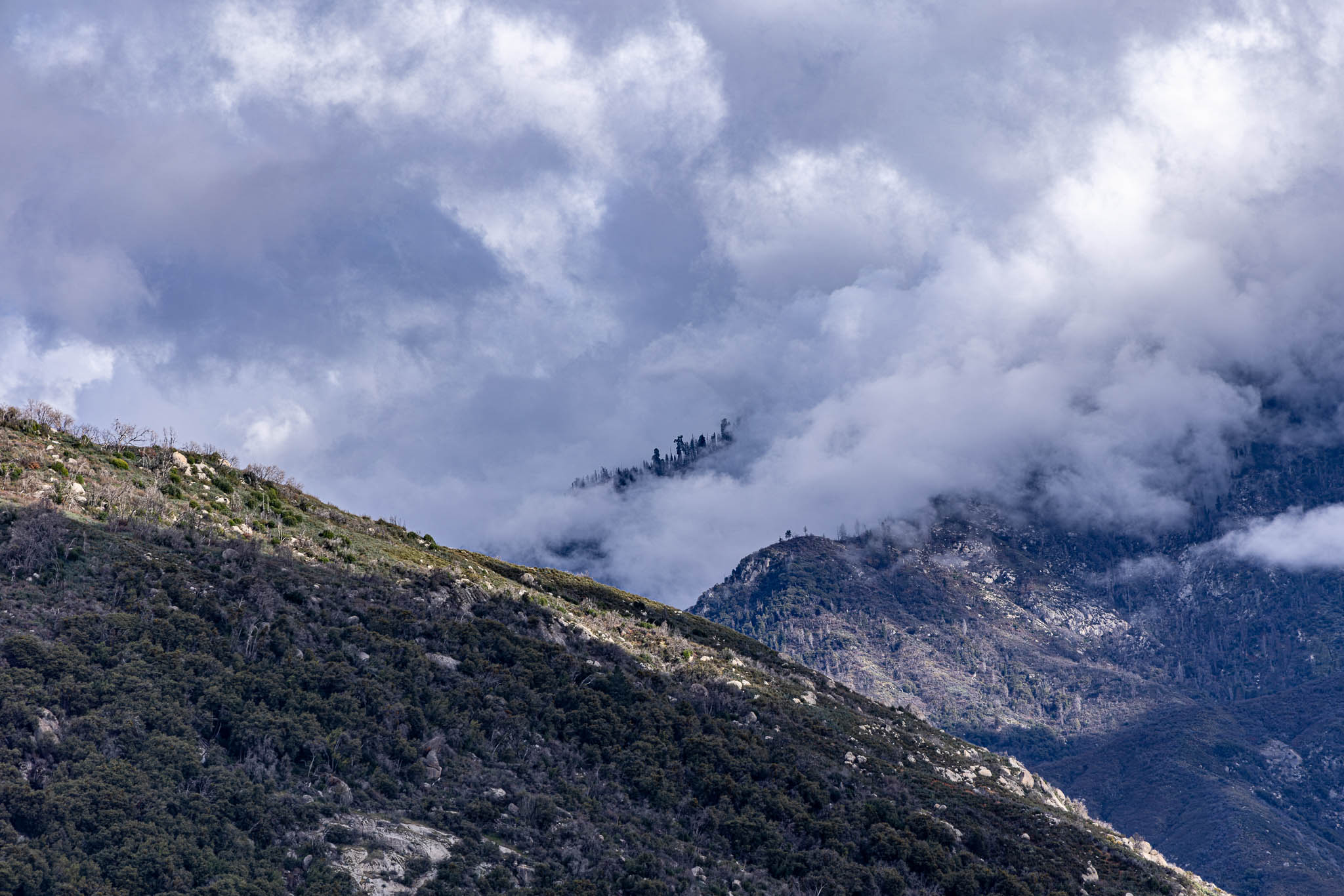
The fog bank on the way down was its own experience. Sequoia in winter is a completely different park than Sequoia in summer — I’d only seen it once at peak season, and the contrast was significant. The trees were bare where they could be bare, everything coated in that particular dampness that the fog leaves on surfaces it touches. Much like home had been for months.
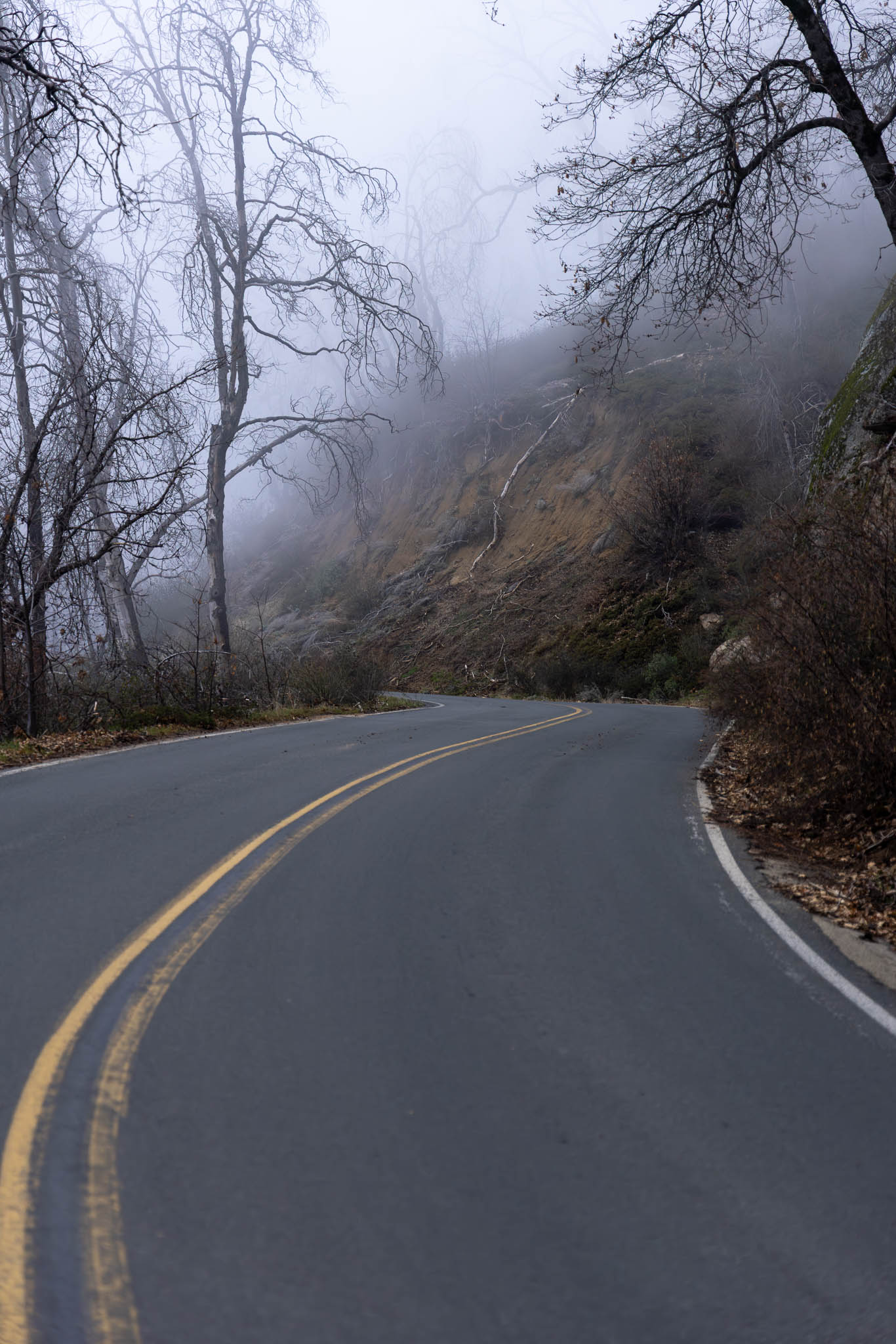
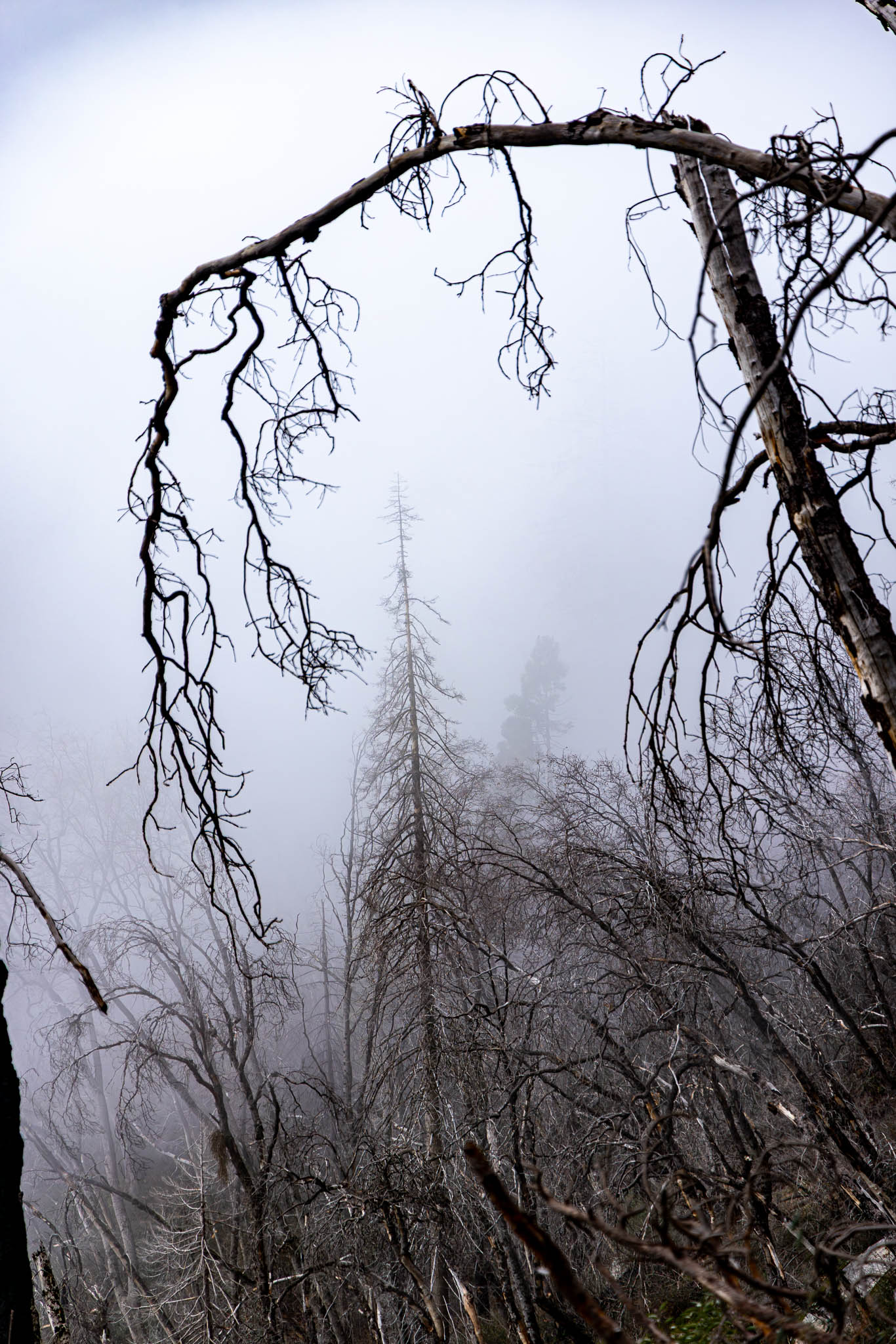
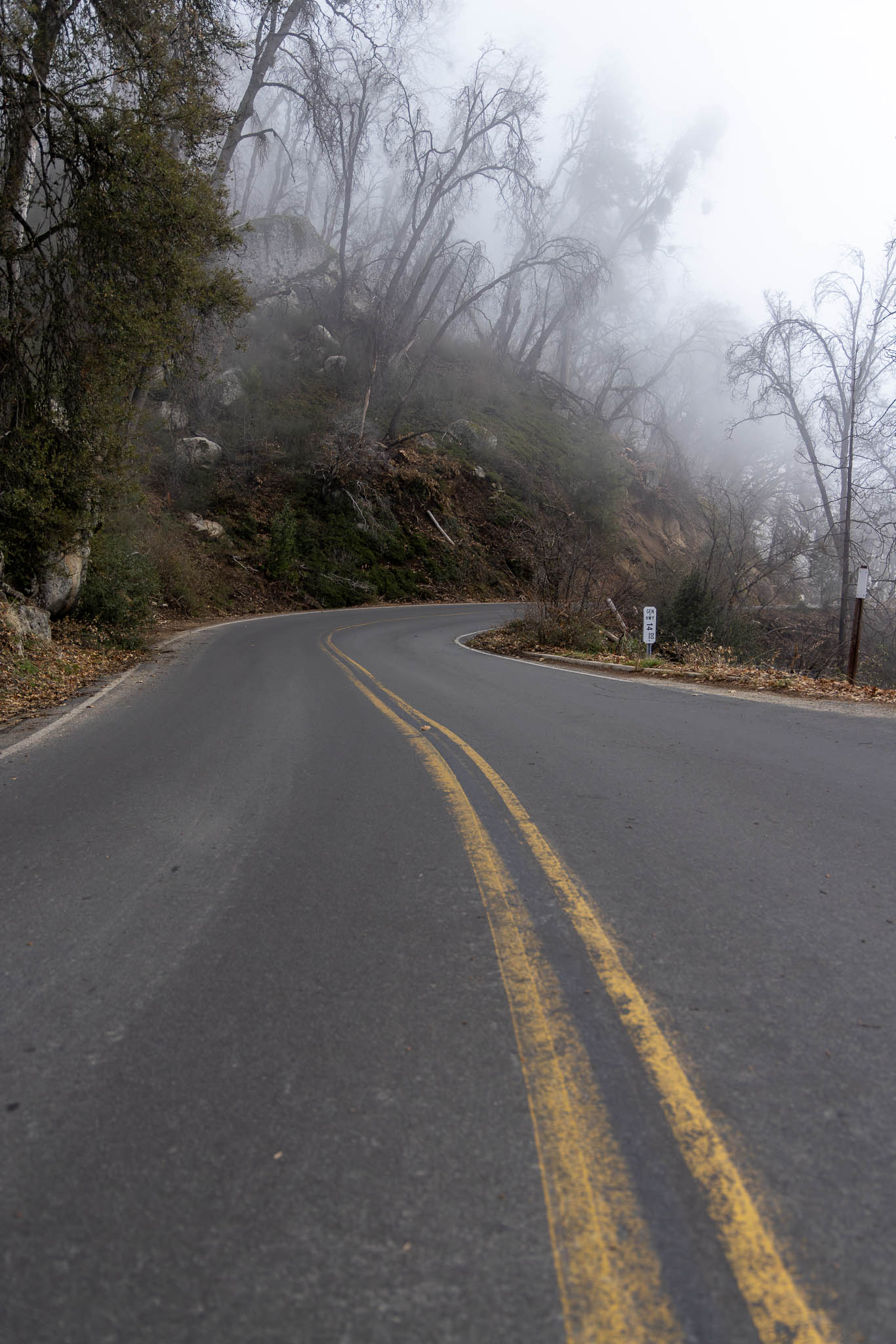
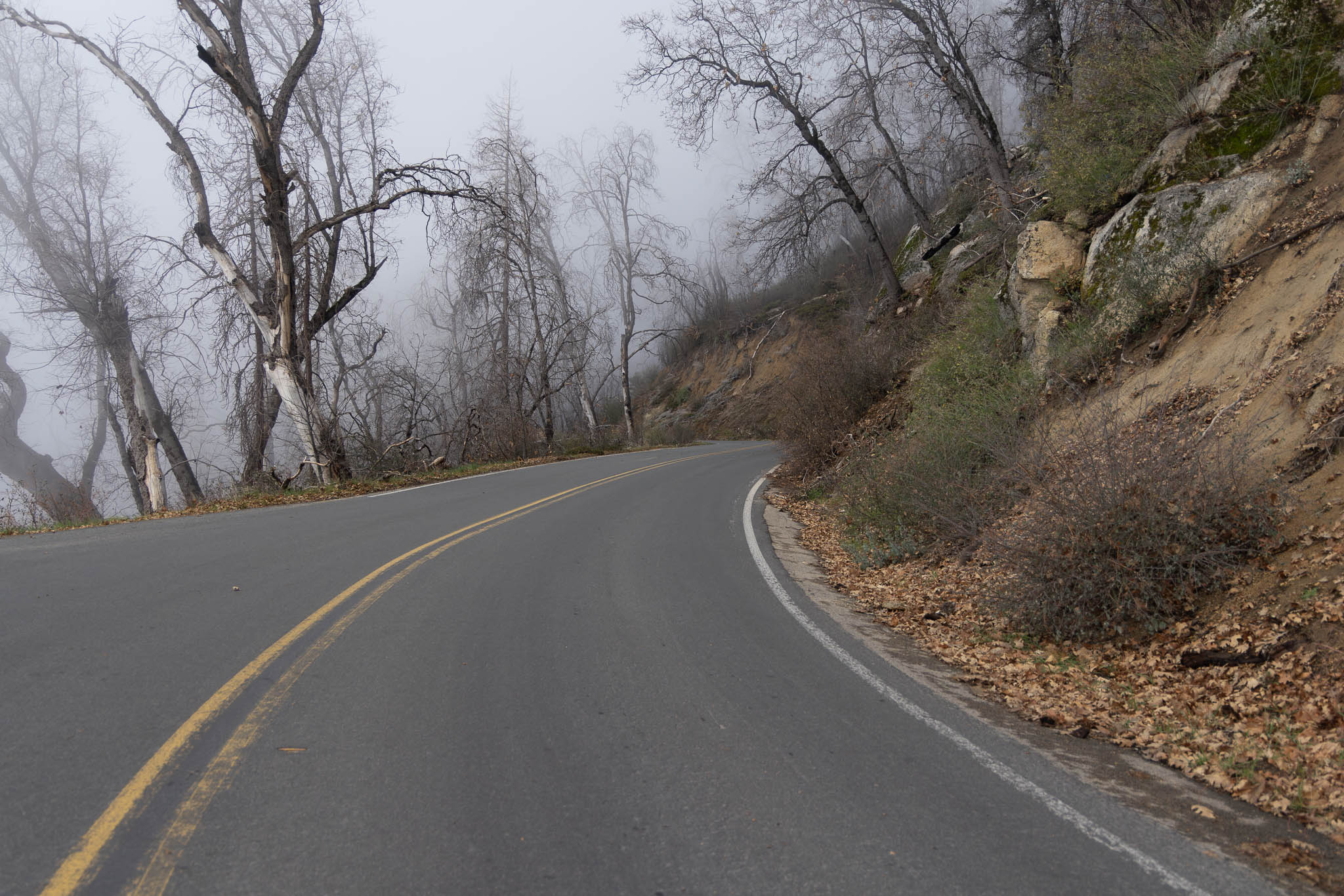
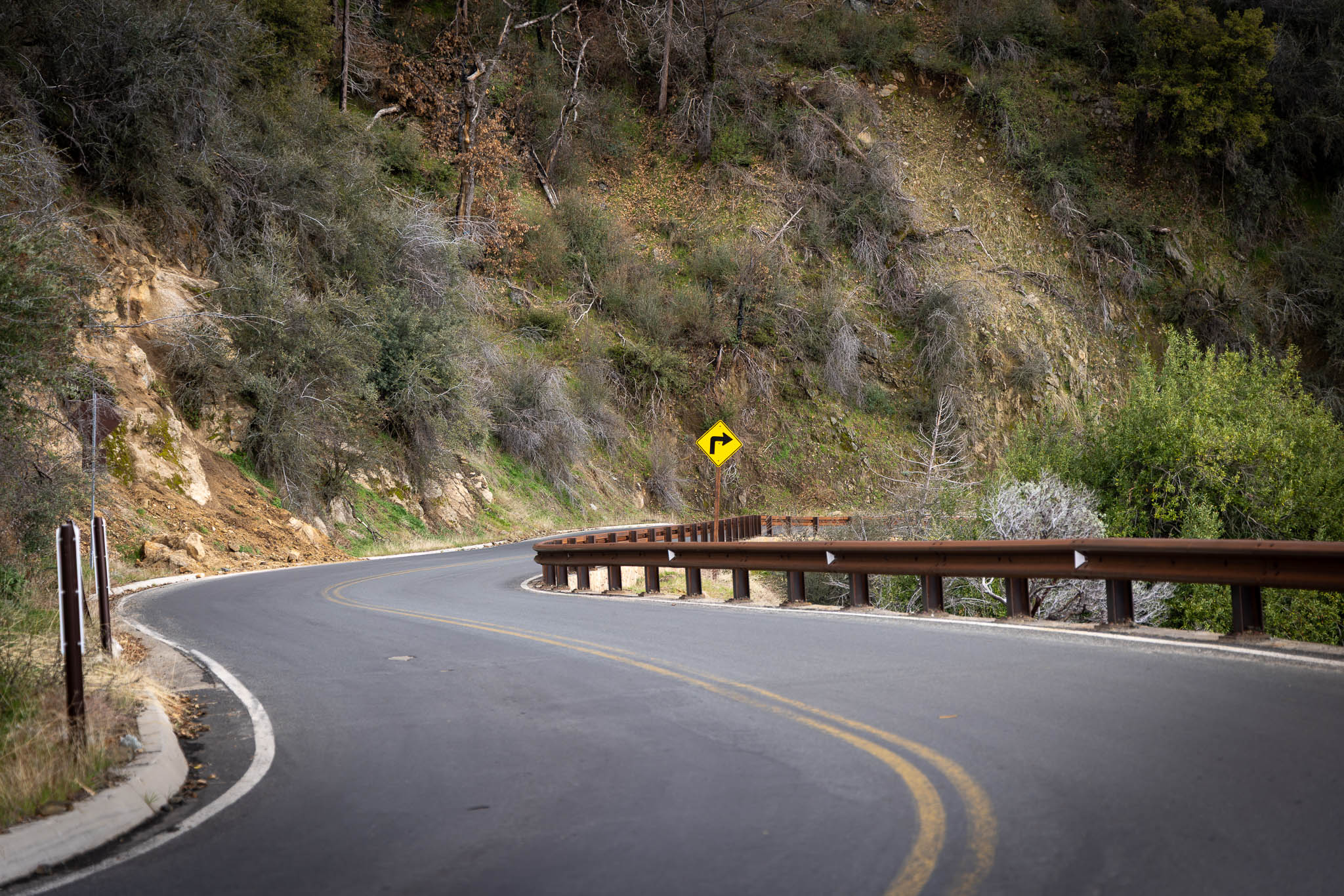
Lower on the mountain, the fog cleared and the landscape opened up. This part of California is drier than the Bay Area — fewer trees, more exposed rock, a different kind of mountain entirely. At one of the turnouts we met a couple from Canberra who had come specifically to see the big trees. D had been to Sydney and we spent a good ten minutes talking — their country, ours, the state of things between them. I can’t do anything about international relations on a national scale. What I can do is make sure that people who travel here feel welcome. The world has done that for me when I’ve been the one showing up somewhere new.



Lunch – River View Bar & Grill

D recommended the River View Bar & Grill for a late lunch, and the setting delivered — table right on the water, good atmosphere, easy to see why this place fills up in summer. They also had charging available, which noted for the future. Getting power in Three Rivers overnight would be a genuine game changer for a return trip.
The menu, though. Dimples Diner had set a high bar that morning, and the River View wasn’t trying to clear it. The menu felt like it hadn’t been updated since the 1970s, leaving the restaurant to compete entirely on location and views — which, to be fair, it has in abundance. I tried a salad. It was vegetables on a plate rather than a dish someone had thought about. Having watched enough of Gordon Ramsay’s restaurant makeovers, I could see the playbook. The bones are good. The menu needs work. If they ever sort that out, it becomes a sought after stop rather than a happenstance of travel.
Lake Kaweah and the Winding Way Down
Coming back down through the valley the world had fully opened back up — greener than I expected for this time of year, the hills catching the late afternoon light in that particular way that makes this part of California look almost Irish. Somewhere after Three Rivers, Lake Kaweah appears on the right side of the road. The reservoir was holding some water, which felt like good news after a few dry winters, though the exposed shoreline told the fuller story — those bare brown bands above the waterline marking how much higher it should be. The reflections were perfect. Green hills, white clouds, all of it doubled in the surface of the water like the lake was trying to show you the sky twice.


The Central Valley was coming back into view now, the mountains softening into foothills and the foothills flattening out. California in spring is a different state than California in summer — everything that goes brown and brittle by summer was still green and alive, the wet season doing its work. D and I had been on the mountain most of the day and you could feel the elevation dropping in the warmth coming back into the air.
How to Do This Road Right
Highway 198 is a genuine must-ride for anyone looking for the national park experience on two wheels. The ultimate version of this route starts in Ducor and works north through California Hot Springs along the Western Divide Highway, which connects into Highway 190. From there, Yokohl Valley Road links 190 to 198, carrying you up through Sequoia National Park and connecting to Highway 180 along the Generals Highway.
At the junction with 180, turn down into Kings Canyon. It’s a dead-end road — 40 miles of largely unspoiled pavement to the bottom of the canyon, and the traffic thins quickly once people realize how committed that drive is. Come out the same way, land in Fresno, and point yourself toward whatever’s next.
One honest note: the Sherman Tree is a car trip (for me), not a motorcycle trip — even in summer. The hike in wearing full riding gear isn’t the experience. See it with a car, a light jacket, and good shoes. Save the motorcycle for the road.
Route:

Leave a Reply