
An old co-worker of mine reached out in March. He wanted to go on a Pashnit motorcycle tour but didn’t want to show up solo and asked would I be interested in joining? We hadn’t seen each other in about ten years, so the chance to reconnect with an old colleague, friend, and rider while exploring new roads seemed like win all around. I’d done the Trinity Alps Pashnit tour with Tim the previous fall, so I knew what to expect this time around. Tim plans everything—the route, hotels, gas stops, meals—you just show up and ride. No group debates about where to eat. No discussions about whether we should take this road or that road. No dealing with someone who didn’t make hotel reservations and now we’re all scrambling. Tim’s got decades of running Pashnit motorcycle tours and uses that depth to craft tours through roads that most of the state doesn’t even know exist. This is why I love riding with Tim.
Plus, I had ulterior motives for signing up. With the Tahoe and western Sierra getting impossibly crowded since Covid, I wanted to understand Tim’s knowledge for this part of California. This Pashnit tour would take us through northeastern California—an area I’d barely scratched the surface of. If there’s anyone who knows the remote roads in the far north, it’s Tim.
I’d made my way to Red Bluff with my buddy J who was headed up to Portland to see R for the One Moto Show. I’d scheudled the Pashnit ride months ago, and couldn’t do two things at once, unfortunately. Both J and I enjoed the ride up Interstate 5. He’d injured his shoulder a few weeks ago, so we kept it to a speed limit ride – one that allowed us to take in the soft colors of sunset. Even many months later, I wanted to capture that same sunset on Interstate 5. I finally did it in September.

The Pashnit tour started with about twelve riders meeting in Red Bluff on a Saturday morning in early May. Red Bluff sits at the northern end of the Sacramento Valley, right where the flatlands start giving way to mountains. It’s the perfect launching point for rides into the Cascades and the far northeastern corner of the state. My old co-worker was there, grinning ear to ear, clearly excited for the adventure ahead. It was good to see him again after so long.
Eastern Tehama County
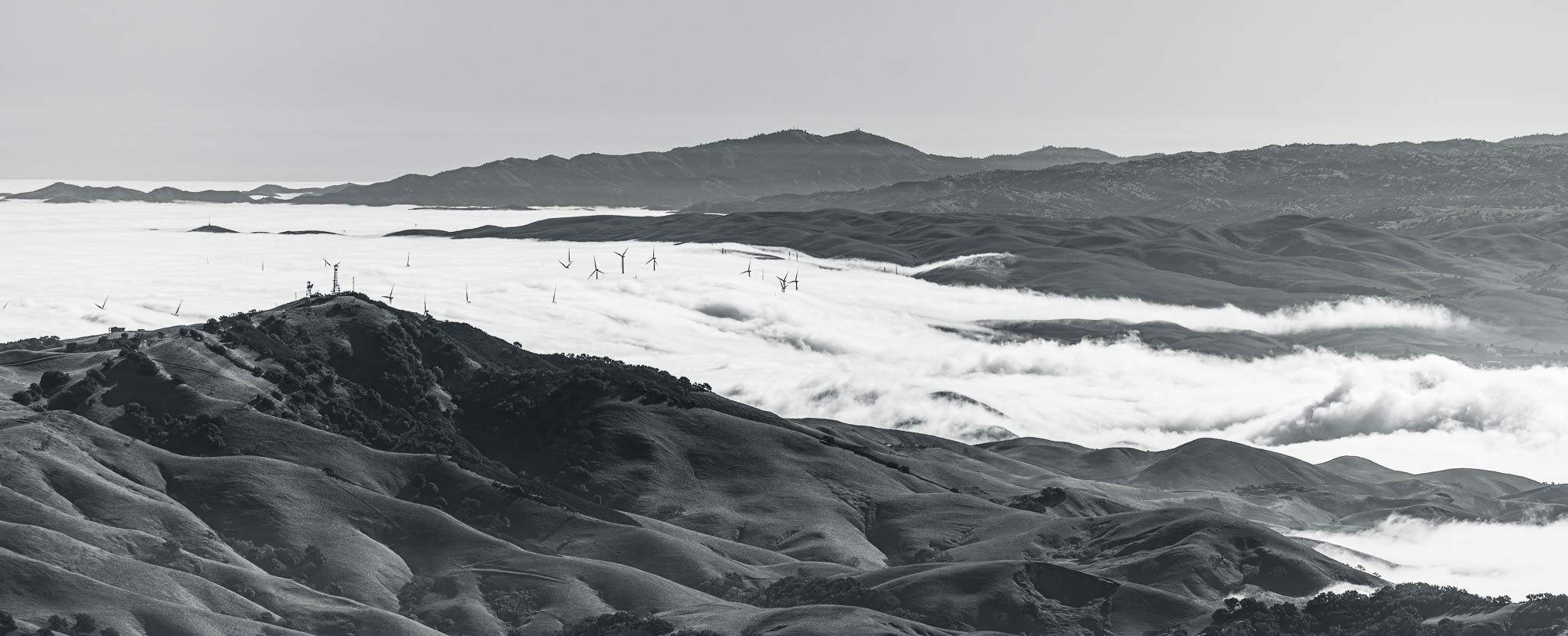
We kicked off the weekend riding through eastern Tehama County on roads I’d never heard of, much less ridden. Places like Whitmore, Round Mountain, and Fall River—small communities scattered across the high desert plateau between the Sierra and the Cascades. This is volcanic country, the landscape shaped by lava flows and cinder cones. Huge ranches stretch out under that big sky you only get in the far north. While mountains and alpine forests extend across this land, it couldn’t be more different than the High Sierras.


The roads here are varied—some sections have smooth pavement, others are a bit rough around the edges. Wide sweepers give way to tight technical sections. What really struck me was how empty they were. We’d go miles without seeing another vehicle, just our group of twelve riders threading through this landscape that felt like it belonged to another era. Tim knows every turn, every good photo stop, every piece of geological history worth noting. I think of myself as someone who knows California’s roads pretty well, but Tim brings it to a different level entirely. He’s the guy who takes you far into the country on quaternary roads that are more forgotten than remembered. Roads like the ones we were riding today—the kind most California motorcyclists don’t even know exist.


I’ve been to Burney Falls before, but it’s worth the stop every single time. Even if it’s crowded with tourists taking selfies, the falls are spectacular. Fed by underground springs, it flows year-round at 100 million gallons per day. You can stand at the base watching the water cascade down in that perfect veil. The group took the obligatory photos and soaked in the scene before getting back on the bikes. We had lunch at the Fall River Hotel, one of those classic old establishments that dates back to the 1930s. It’s the kind of place where the food is simple but good, and the history seeps out of the walls. After lunch we made our way to Burney Falls.


Glass Mountain and the Snow Pivot
Next on the agenda was Glass Mountain, a massive obsidian flow that rises above the landscape like something from another planet. I was really looking forward to seeing it—that otherworldly landscape of black volcanic glass. But spring in the high country is unpredictable. As we gained elevation, we started seeing snow. Not just patches on the side of the road—serious snow, the kind that makes continuing questionable at best. Once snow covered the road more than a few inches thick, we pivoted directions.


This is where Tim’s experience running Pashnit tours really shows. He didn’t make a big deal about it, didn’t act frustrated or thrown off. He just assessed the situation, checked with the group, and pivoted us to a different route without missing a beat. We rerouted to Lower McCloud Falls instead, and honestly, it was spectacular. The snowmelt was running heavy, and the falls were absolutely raging. The water was that perfect glacial blue-green, crashing over the rocks with incredible force. The trail down to the falls was lined with wildflowers just starting to bloom, and the forest smelled like wet earth and pine. Sometimes the backup plan turns out to be exactly what you needed.


Yreka and Dinner at Black Bear
I wanted to do a bit of exploring on my own to take in Mount Shasta. It’s an impressive volcano, rising 10,000 feet above the surrounding high plains.


We rolled into Yreka in the late afternoon. We checked into our rooms at the motel—Tim had already handled all the reservations, so it was seamless—and regrouped for dinner at Black Bear Diner. This is where Pashnit motorcycle tours really shine. Twelve riders around a long table, swapping stories from the day, talking about bikes and roads and plans for tomorrow. My old co-worker and I caught up properly for the first time, filling in the gaps of ten years apart. Others in the group were comparing notes on gear, discussing line choices through certain sections, debating the merits of different tire compounds.

This is what I’d been missing on solo rides—the camaraderie, the shared experience, the way conversations flow when everyone’s tired and satisfied from a good day in the saddle. On my second Pashnit tour, I was starting to feel like part of the group rather than an outsider. People remembered me from the Trinity Alps Pashnit tour, asked about my bike setup, included me in the banter. It felt good.
Sunday Morning: Rain, Cold, and Gazelle-Callahan
Sunday morning brought weather. Real weather. We woke up to gray skies and temperatures in the low forties, with rain forecast for the morning. As we geared up in the parking lot, I could see riders checking their rain gear, adjusting layers, mentally preparing for what was coming. I could see storm clouds off to the west.
Gazelle-Callahan Road was socked in the rain and cold. Temperatures hovered around 40 degrees with wet pavement and reduced visibility. This was the kind of riding that pushes you outside your comfort zone—not dangerous necessarily if you’re smart about it, but challenging enough to demand your full attention and test your skills.

After two days of riding in New Zealand’s rain earlier this year, I’d learned something about myself and wet weather riding. The mental games are often worse than the actual reality. Rain isn’t a monolith—there’s gentle rain, heavy rain, sideways rain, warm rain, cold rain. Today didn’t have to be the worst-case scenario. Tire technology is outstanding, and the tires are way better than I would ever be. Millions of people ride motorcycles billions of miles in the rain and do just fine. I found power in that knowledge. The rain was cold, yes. My hands got numb despite my winter gloves. Visibility was reduced. But the pavement stayed grippy, I kept my inputs smooth, and we made it through without incident.
That’s growth. Not just in riding skill, but confidnece in my mental approach. Sometimes you have to ride through the rain to get to the good stuff on the other side.
Scott Bar Road
Once we got through the worst of the weather, we turned onto Scott Bar Road. This is classic northern California—narrow two-lane roads running through ranching country, following river valleys, climbing over low passes. These roads that dont appear on most tourist’s list but offers solid riding and beautiful scenery.


Scott Bar Road is tight and windy. It keeps me on my toes. The pavement quality varies enough that you’re constantly reading the road ahead, adjusting your line, staying engaged. There’s no autopilot on roads like this. That’s what makes them good.
Highway 96: The Epic Stretch
Then we hit Highway 96, and suddenly everything clicked. If you know, you know. If you don’t, Highway 96 is approximately 150 miles of continuous curves running along the Klamath River through one of the most remote parts of Northern California—almost, sans the deserts. It’s a commitment to get there so you don’t find many people here. This isn’t a road you ride casually on your way to somewhere else. You have to want it, have to be willing to put in the miles just to reach the starting point.
However, it’s worth every mile of the approach. The pavement is good, the curves are endless, and there are no cars. We’re talking long stretches where you see nothing but road, river, and mountains. The kind of riding where you fall into a rhythm and just flow, where the bike becomes an extension of your body and the curves become instinctive. High-speed sweepers, technical switchbacks, everything in between.
I’ve ridden 96 a few times now, and each time I appreciate it more. This road is up there with Highway 36 (famous for its 140 miles of turns), but I actually think 96 is better. It’s more varied, more remote, more raw. And it’s still relatively undiscovered, which means you get to experience it the way California used to be before everyone found it.
We had lunch in Happy Camp, and I’m starting to develop a real affection for this little town. It’s way up there—seriously remote, the kind of place you have to want to get to. One of my buddies from the rodeo circuit moved up here from the Bay Area a while back, and I’ve been able to visit a few times now, seeing the area through his eyes, I’m learning about the community, the challenges and opportunities of living this far from everything, the particular character of these small northern towns.


There’s something appealing about places like Happy Camp. I’m thrilled that the restaruant says no to pets. People here are unpretentious, and real, who make the choice to be here rather than ending up here by default. The pace is different. The values are different. Coming from the Bay Area where everything is optimized, monetized, and rushed, there’s something refreshing about a place that just exists on its own terms.
Saturday Afternoon: Willow Creek and Eureka
Saturday afternoon we made our way through Willow Creek and stopped at the Bigfoot Museum. Look, it’s campy. It’s kitschy. It’s absolutely not serious anthropological work. But it’s also fun, and sometimes that’s exactly what was needed after a soggy ride across Norhtern California’s longest, twistiest, lonliest road: a moment of levity, a chance to laugh and take some ridiculous photos and embrace the absurdity.


The museum is filled with Bigfoot “evidence,” but is any of it real? Almost certainly not. Does it matter? Not really. It’s part of the character of this region, part of the mythology of the deep forests and remote valleys where people swear they’ve seen things that don’t quite fit the known catalog of wildlife.
We took our photos, bought some magnets, and got back on the bikes grinning.
We overnighted in Eureka Saturday night, which was a bit of a logistical challenge. We’d originally wanted to stay in Fortuna and eat at Eel River Brewing—their food is consistently excellent, and I’d had great meals there on previous rides. But the area was completely booked, so we ended up in Eureka instead and made reservations at Lost Coast Brewing.
I don’t deny it, I’m an Eel River guy. I even have thier hoodie. J pushed me to buy it (and I still love it). I had a really rough experience at Lost Coast brewing many years ago and things hadn’t changed there. Still, after the day’s ride, even mediocre food tasted pretty good. We were all tired in that satisfying way that comes from long hours in the saddle, from weather challenges overcome, from roads well-ridden.


Sunday: The Ride Home and The City
Sunday morning meant an early departure. I had a party to get to in San Francisco that afternoon, with a goal to be back in the city by noon. Some riders were taking their time, exploring more of the coast, maybe hitting some of the more scenic routes. I needed to make good time on 101. The party was with riders I hadn’t seen in a while, and I didn’t want to miss it.

I was on the road early, knowing I had a solid ride ahead of me. I could see the wind blowing off the ocean and making teh flowers from the cherry and plum trees dance across the parking lot. The 101 ride was straightforward—just putting in the miles, making time. Nothing particularly memorable about it. After two days of challenging roads and variable conditions, the highway felt almost meditative in its simplicity. No decisions to make, no lines to choose, just maintaining speed and letting the miles roll by.

San Francisco was the opposite of meditative. The city was full of traffic grind. Stop signs on steep hills with a heavy bike got tiring fast. The GS is a tall, heavy machine, and navigating San Francisco’s urban jungle after two days of mountain riding was a different kind of workout. My legs were burning from holding the bike upright at steep intersections. My clutch hand was getting tired from all the stop-and-go.
But the party made it worth it. Good people, good conversations, and riders I hadn’t seen in months. We swapped stories about recent rides, talked about upcoming tours, made plans for future adventures. This is the community part of motorcycling that matters—the connections, the shared passion, the understanding that comes from people who get why you do this.
Sunday Afternoon: Washing Away the Miles
Late Sunday afternoon I washed the bike. After a ride like that—two days in variable weather, rain on Gazelle-Callahan, all those miles through remote northeastern California—the GS was filthy. Grit from the wet roads had built up everywhere. Dirt and road spray covered the cases. The motor was caked in grit. The windscreen was coated in bug splatter and dried rain spots.
There’s something satisfying about cleaning a bike after a good ride. It’s part of the ritual, part of honoring the machine that carried you through all those miles. As I worked through the wash, I thought about the weekend. The roads we’d ridden, the weather we’d pushed through, the places we’d seen. Eastern Tehama County, Burney Falls, the rain on Gazelle-Callahan, Scott Bar Road, Highway 96, Happy Camp, Willow Creek
I got home tired but satisfied. Another weekend exploring parts of California I’d never seen, pushing my comfort zone a little further, building on the knowledge Tim shares so generously through his Pashnit motorcycle tours. My old co-worker and I made plans to do another Pashnit tour next year. After ten years apart, it felt good to reconnect over something we both love.
The Sierra might be getting crowded, but there’s still so much of this state left to discover. If you’re looking for motorcycle tours that take you beyond the usual California routes—roads like Highway 96, the remote northeastern counties, the volcanic backcountry—Pashnit tours are worth every mile. And I slept well Sunday night—the kind of deep, dreamless sleep that comes after a good, tiring ride and a clean bike in the garage.
From one adventure onto the next. Find yours at: https://www.pashnittours.com. Thanks Tim!


Leave a Reply