
I love engineering marvels! When I found out I was headed to Denmark for a few days on a work trip, I wanted to see what might be of interest to see. Most of my colleagues found me crazy, but the Øresund Bridge instantly caught my eye. At first glance, the Øresund Bridge reminded me of the Sunshine Skyway Bridge just outside of St. Petersburg, with its tall towers and broad cables supporting the bridge.

Looking left and right across the bridge one odd truth quickly surfaces: the bridge only goes to an island and the road disappears.

I was ultimately confused by this engineering conundrum. Why would a bridge of this magnitude go to an island with no people or services on it and quickly disappear into the sea? I wanted to see and experience the Øresund Bridge to Malmö. Plus, it will probably be the only blog post on my entire blog that uses the letters Ø and ö. Why have one O when you can have three.
The Øresund (pronounced er-sund) Bridge connects the cities of Copenhagen and Malmö. The two countries had wanted to build the bridge for a long time, but engineering skills hadn’t developed yet to do such a large, complicated project. The bridge finally opened on July 1, 2000. Because of the bridge’s proximity to the Copenhagen airport, the engineering teams had to route the roadway through an island into a tunnel to give the airport right-of-way.
The Øresund bridge isn’t cheap to drive over – it’s nearly $50 USD and collected both directions on the bridge! Highway E20 is a moneymaker for both of these Scandinavian countries.
Here’s the best video I could find that gives a fantastic overview of the Øresund Bridge. It’s worth watching if you’ve read this far.


I boarded the train in Copenhagen and traveled east towards Sweden. I struggled a bit more adventuring on this trip that I have in other international adventures. Somehow, the world seems a little less safe these days with the war in Gaza, Ukraine, the assassination attempt on Donald Trump – a lot of me just wanted to stay close to the people I knew. However, I knew that I would regret not going to see this engineering marvel up close.


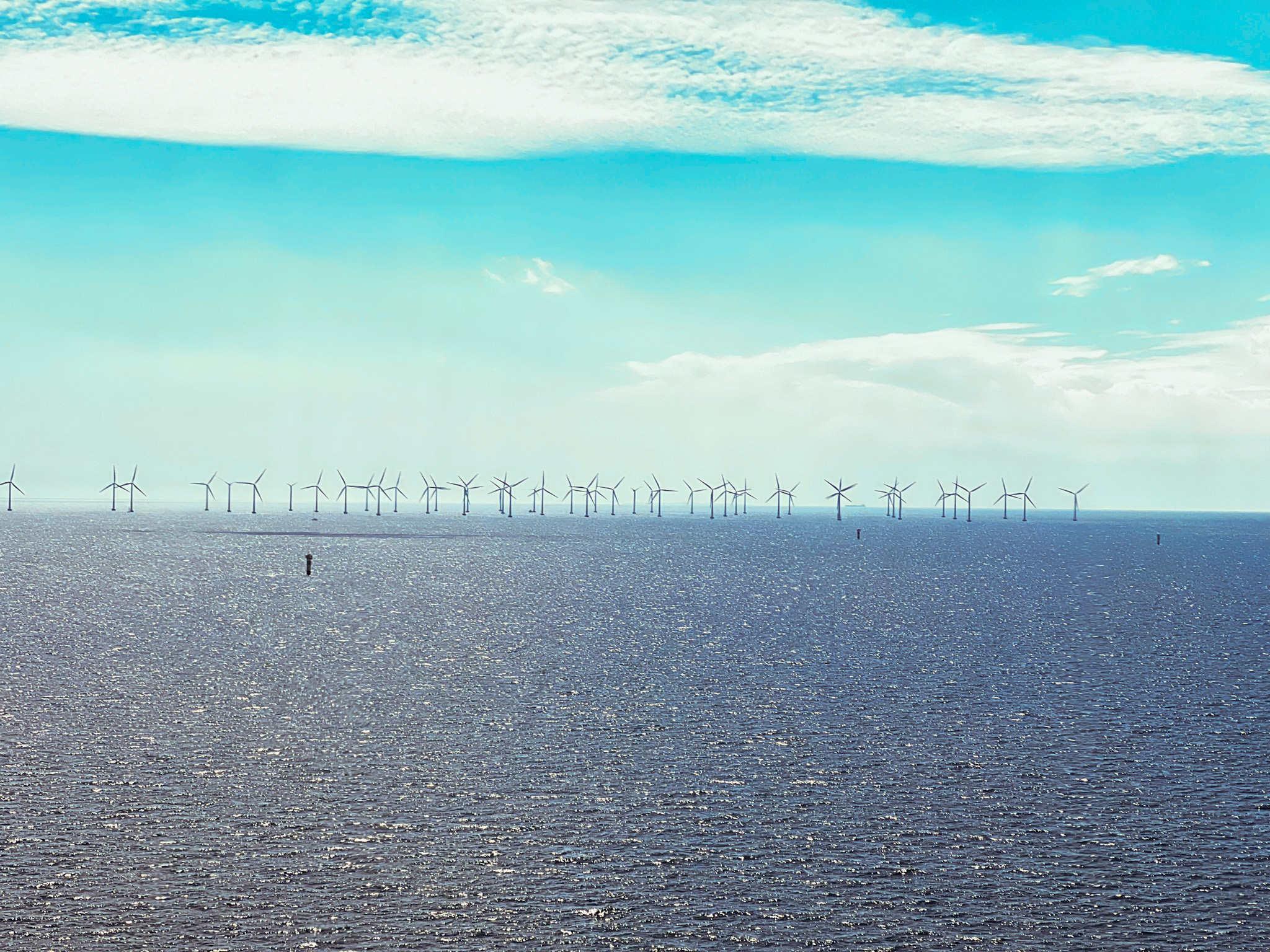
After passing through the Copenhagen airport, the train emerges onto the man-made island that supports the west side of the bridge. During construction of the Øresund Bridge, engineers had to build a man-made island for the west side of the bridge. Crews of people dredged the sound between the two countries that created the soil for this new island.
The Øresund Bridge is two levels, much like the San Francisco – Oakland Bay Bridge. Where the two bridges differ is that the Øresund Bridge has car traffic on top and train traffic on the bottom. It was fun to whiz across the sound between the two countries on my new found Swedish adventure!

Upon arriving in Malmö, the automated voice on the train advised travelers that we were heading into passport control. I instantly froze. Why would I have to go through passport control? I’m in the EU! What were the Swedish police going to do with me? The last thing I needed was to be held in immigration limbo while on a work trip!
Fortunately, my anxiety was short-lived. There was no passport control upon landing in Sweden. I was able to exit the train and visit Sweden much like Californians wander into Nevada. The Malmö Emporia was a fantastic looking building. The curved glass work caught my eye as I’ve often seen glass as a flat entity. The contours of this building were quite impressive – even if it was just a mall, lol!


As I wandered around, I stumbled into a nearby park with the “wall of mist.” Each of these discs had fine ministers behind them blowing out water to keep local park visitors comfortable in the hot sun. Given that nobody was there, it seemed a bit superfluous, but for this visitor, I appreciated the refreshing spray.
Many of the signs within the train station had a bit of old-school defaults with a new technological refresh. This particular one used large square pixels which appeared to be a modern take on the old flip systems in train stations of a bygone era.

Route:





Leave a Reply